Can you stack NOHFC and FedNor funding?
Updated Oct 1, 2026 · program facts link to dataset records
Can you combine NOHFC and FedNor on one project?
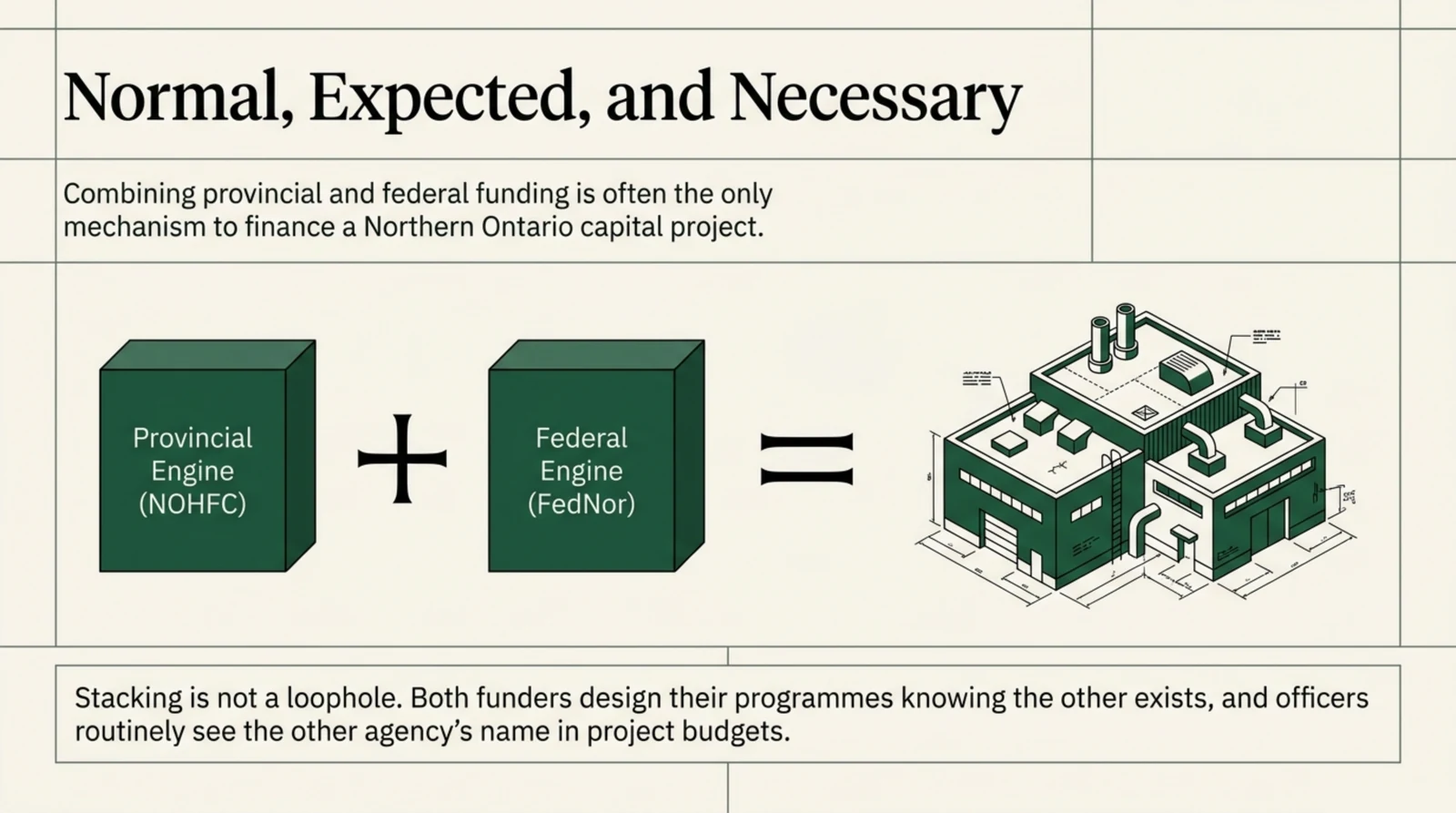
Yes. Stacking provincial NOHFC funding with federal FedNor funding on the same project is normal, expected, and often the only way a Northern Ontario capital project gets financed. Two rules govern it: every program caps the total government assistance a project can carry (the stacking limit), and you must disclose every funding source, applied for or approved, in every application.
Stacking is not a loophole. Both funders design their programs knowing the other exists, and officers routinely see the other agency's name in project budgets. The risk is not in combining them but in mismanaging the mechanics: exceeding the combined government share, claiming the same cost twice, or getting caught in the timing trap described below.
What is the maximum government share?
Every program sets a ceiling on what government at all levels combined (federal, provincial and municipal) can contribute to your eligible costs. For for-profit business projects the combined limit is commonly reported around 50%, though it varies by program and project. For not-for-profits, municipalities and Indigenous communities it is often much higher. The number that binds you is the one in your contribution agreement: verify it there, not in a guide.
Published program maximums show the range. FedNor's EDI pays up to 90% of project costs for Francophone economic development, CIINO up to 90% for community economic development capacity, NOHFC's broadband and cellular stream 50% of eligible costs, and NOHFC's Community Events stream up to 30% to a maximum of $15,000. Note that a program's own maximum is not the same thing as the stacking limit: a program can pay 50% while its agreement still permits other government sources to bring the combined share higher, or it can cap the total at the same figure. Ask each officer what the total-assistance limit is for your file.
If the stack ends up over the limit, contribution agreements include clawback: the excess becomes repayable. Mid-project changes count too. If you win new funding after approval, tell both funders promptly.
How do you apply for stacked funding?
Apply in parallel, not in sequence, and make the applications identical where they overlap. Use the same total project cost, the same cost categories and the same quotes in every budget, show each funder the amount requested from the other, and update both files whenever a number changes. Discrepancies between applications are what slow files down and trigger questions.
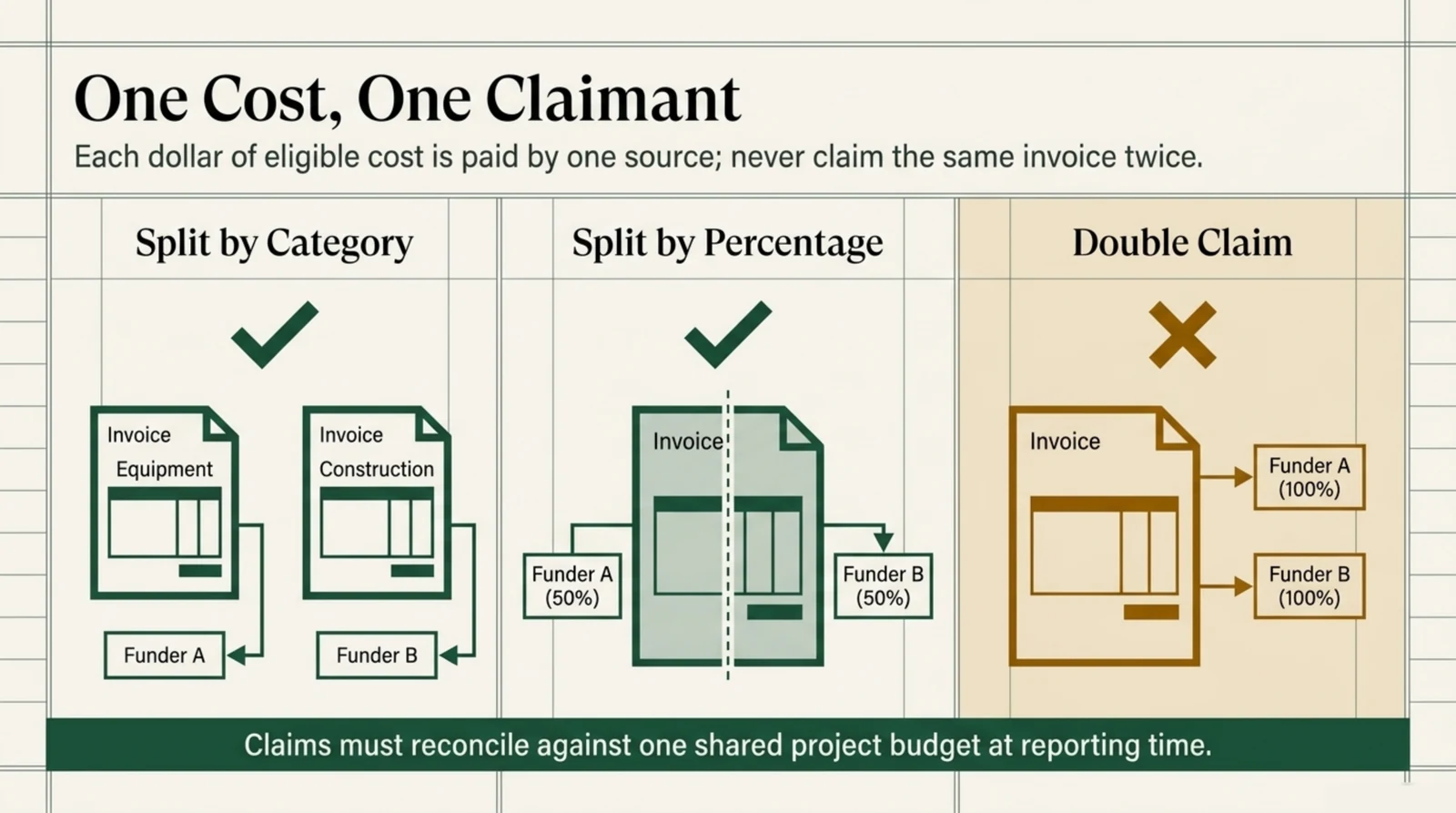
Two mechanics matter. First, never claim the same invoice to two funders: each dollar of cost is paid by one source. You can split a project by cost category (one funder on equipment, another on construction, for example) or by percentage share of the whole, but the claims must reconcile at the end. Second, expect verification. Funders confirm with each other, and a letter of support or an approval-in-principle from one materially strengthens the other application.
What is the contingency-delay trap?
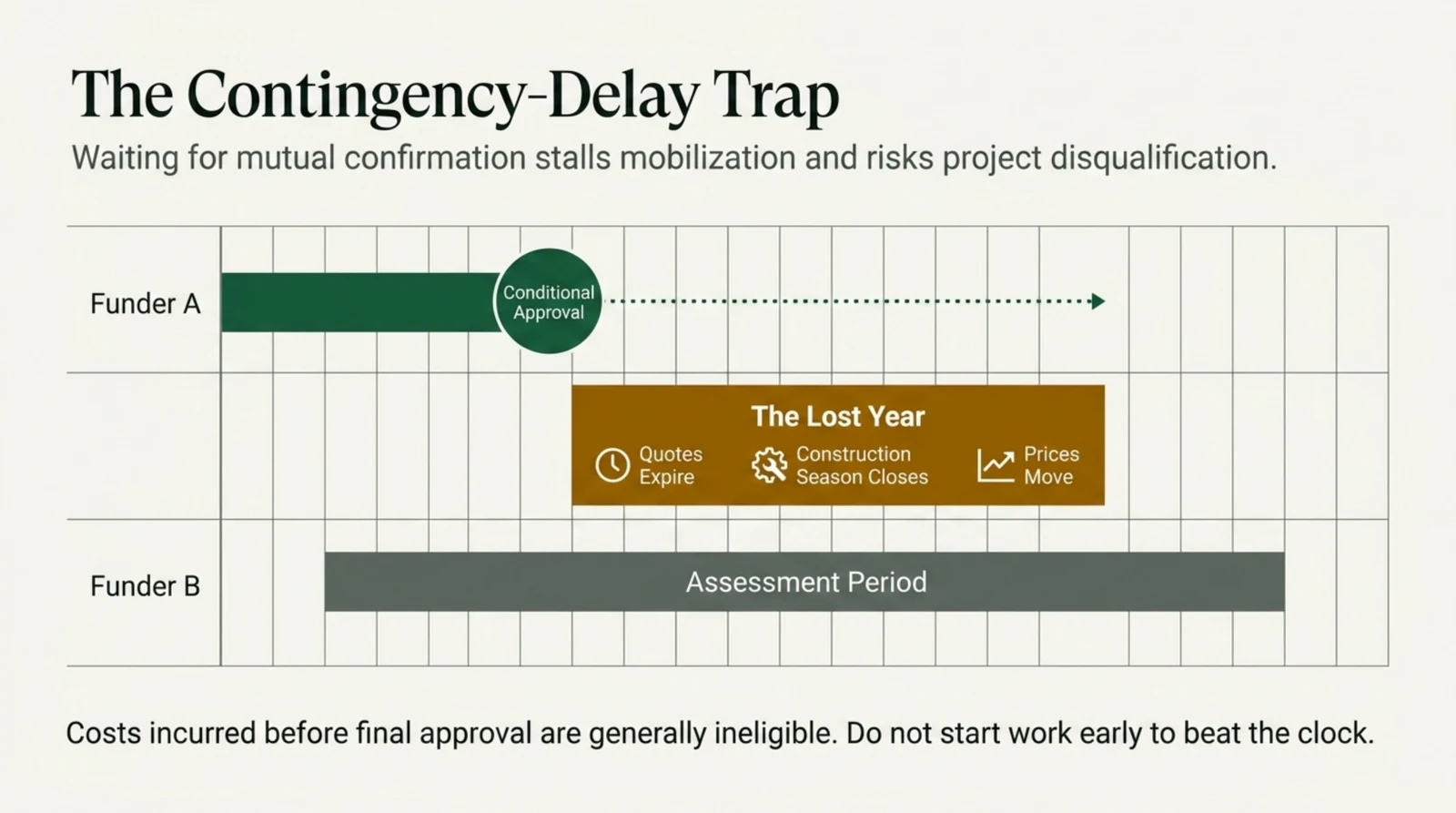
The trap: each funder wants your financing confirmed before it gives final approval. So funder A approves conditional on funder B, funder B is still assessing, and the project sits fully approved by nobody. Meanwhile you cannot start work, because costs incurred before approval are generally ineligible at both agencies, and while you wait, quotes expire, the construction season closes and prices move.
This is the single most common way stacked Northern Ontario projects lose a year. Ways to manage it:
- Ask each program officer early how they handle stacked files and which approval typically lands first for projects like yours.
- Get conditional approvals in writing, so the other funder can rely on them as confirmed financing.
- Build the longest realistic combined timeline into your project plan. Applicants commonly report several months per funder; verify with each office and set quote validity periods to match.
- Arrange bridge or interim financing, for example through your local CFDC (Community Futures business loans), so a late-arriving payment or agreement does not stall mobilization once approvals exist.
- Do not start work early to beat the clock. Starting before approval can make costs ineligible or disqualify the project outright.
Which combinations work well in practice?
The strongest stacks pair funders on different parts of the same project, or different projects within the same plan, rather than filing two applications for the same dollar. Common Northern Ontario patterns:
- Business expansion: a conditional contribution through NOHFC's Grow stream alongside a repayable loan from your local CFDC (commonly up to $150,000) as part of the financing side of the budget.
- New operations: NOHFC's Locate stream (up to $5 million as a conditional contribution) alongside federal support under the NODP; verify instruments and shares with both offices.
- Hiring: NOHFC Workforce Development and FedNor Youth Internships for different positions. The same wage is never funded twice.
- Innovation: NOHFC's Innovation Stream (up to 50% of eligible costs) with federal advisory and project support through NRC IRAP.
- Tourism: FedNor's Tourism Growth stream with partnered investment through Destination Northern Ontario's partnership initiatives.
- Community projects: capital through Enhance Your Community or Rural Enhancement, with the staff capacity to manage the project pipeline funded through CIINO (up to 90% of costs, maximum $100,000 a year for up to three years).
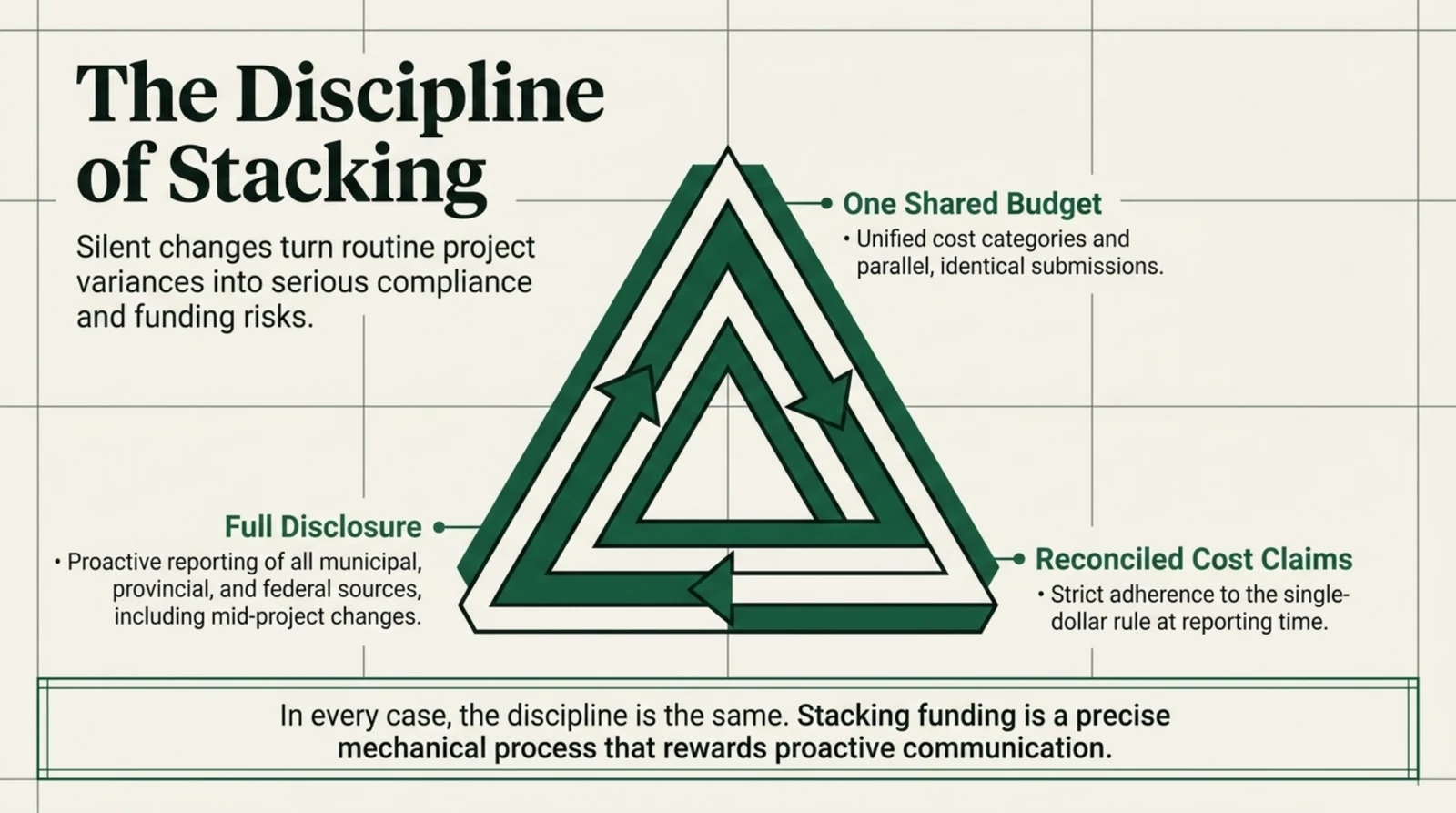
In every case, the discipline is the same: one shared project budget, full disclosure in both directions, and no cost claimed twice.