Which Home Renovation Savings stream does your heating fuel put you in?
Updated Oct 1, 2026 · program facts link to dataset records
What is Home Renovation Savings?
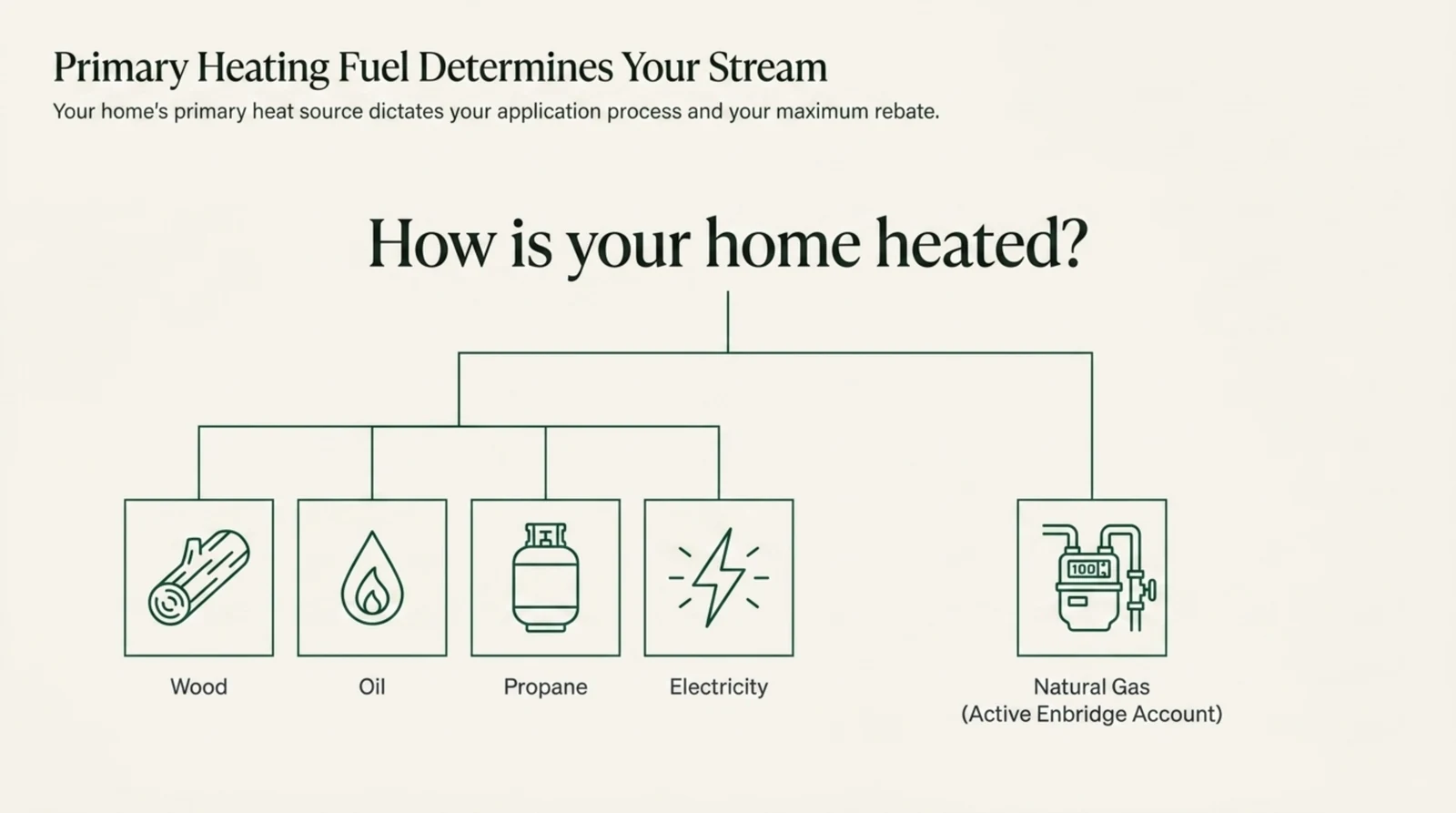
Home Renovation Savings is Ontario's main home energy rebate program, delivered by Save on Energy (the IESO) together with Enbridge Gas, and reported to have launched in January 2025. It pays rebates for heat pumps, insulation, and other efficiency upgrades. The stream you apply through, and the rebate amounts available to you, depend on one question: how is your home heated?
That question matters more in Northern Ontario than almost anywhere else in the province, because a large share of rural northern homes sit off the natural gas grid and heat with wood, oil, propane, or electricity. Those homes land in the program's richest rebate tier. With the federal Canada Greener Homes Grant closed to new applicants, this program is now the front door for home energy retrofit money in Ontario.
Heated with electricity, oil, propane or wood? You are in the top tier
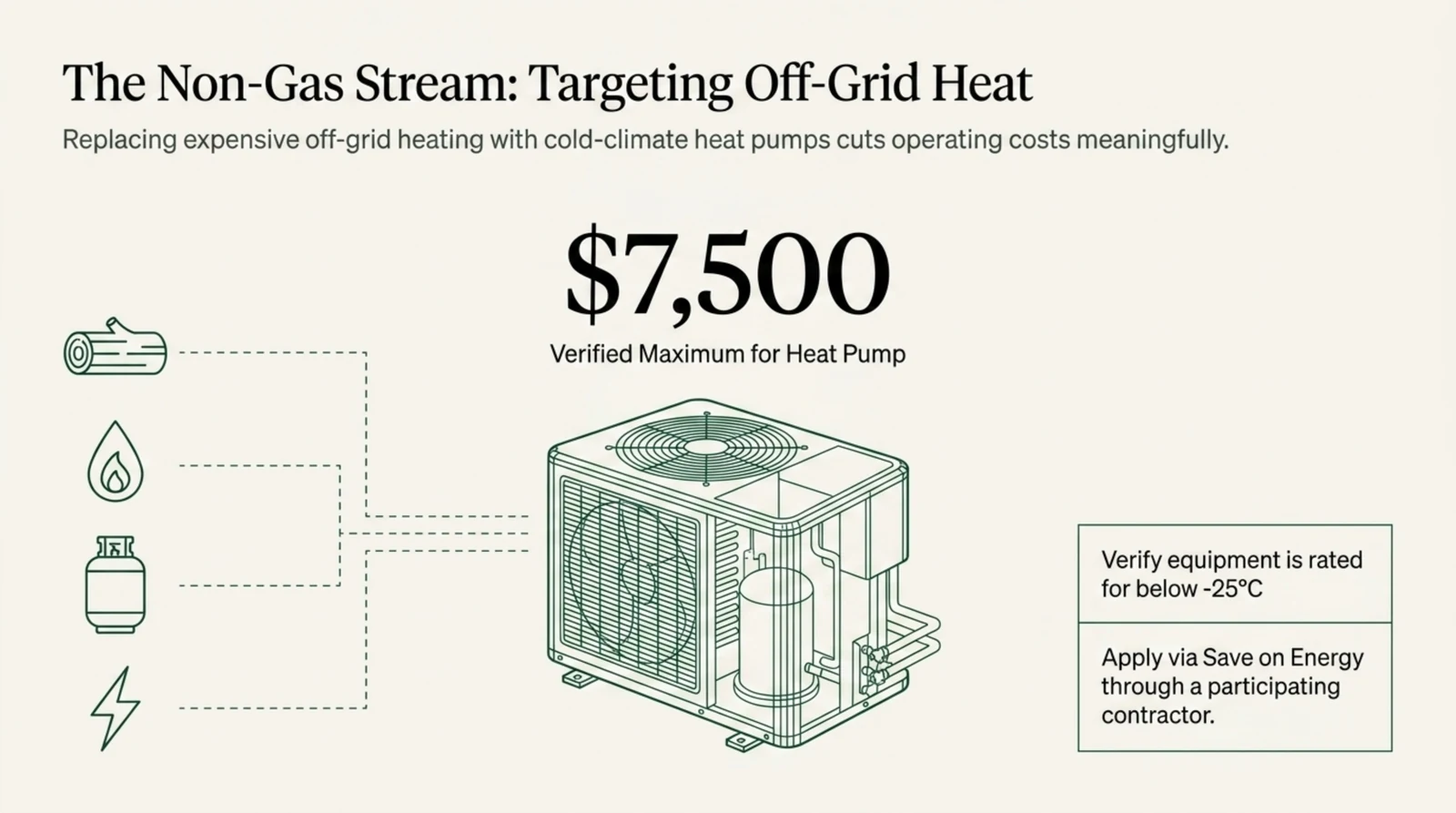
If your home's primary heat is electricity, oil, propane, or wood, you qualify for the program's top rebate tier: up to $7,500 toward a cold-climate air source heat pump. That figure is verified. The stream is aimed squarely at homes without natural gas service, which describes much of rural and small-town Northern Ontario.
The economics tend to be strongest exactly here: replacing oil, propane, or electric baseboard heat with a cold-climate heat pump usually cuts operating costs meaningfully, and modern cold-climate units are rated for northern winters. Have a qualified contractor size the system, and choose equipment rated to perform well below minus 25.
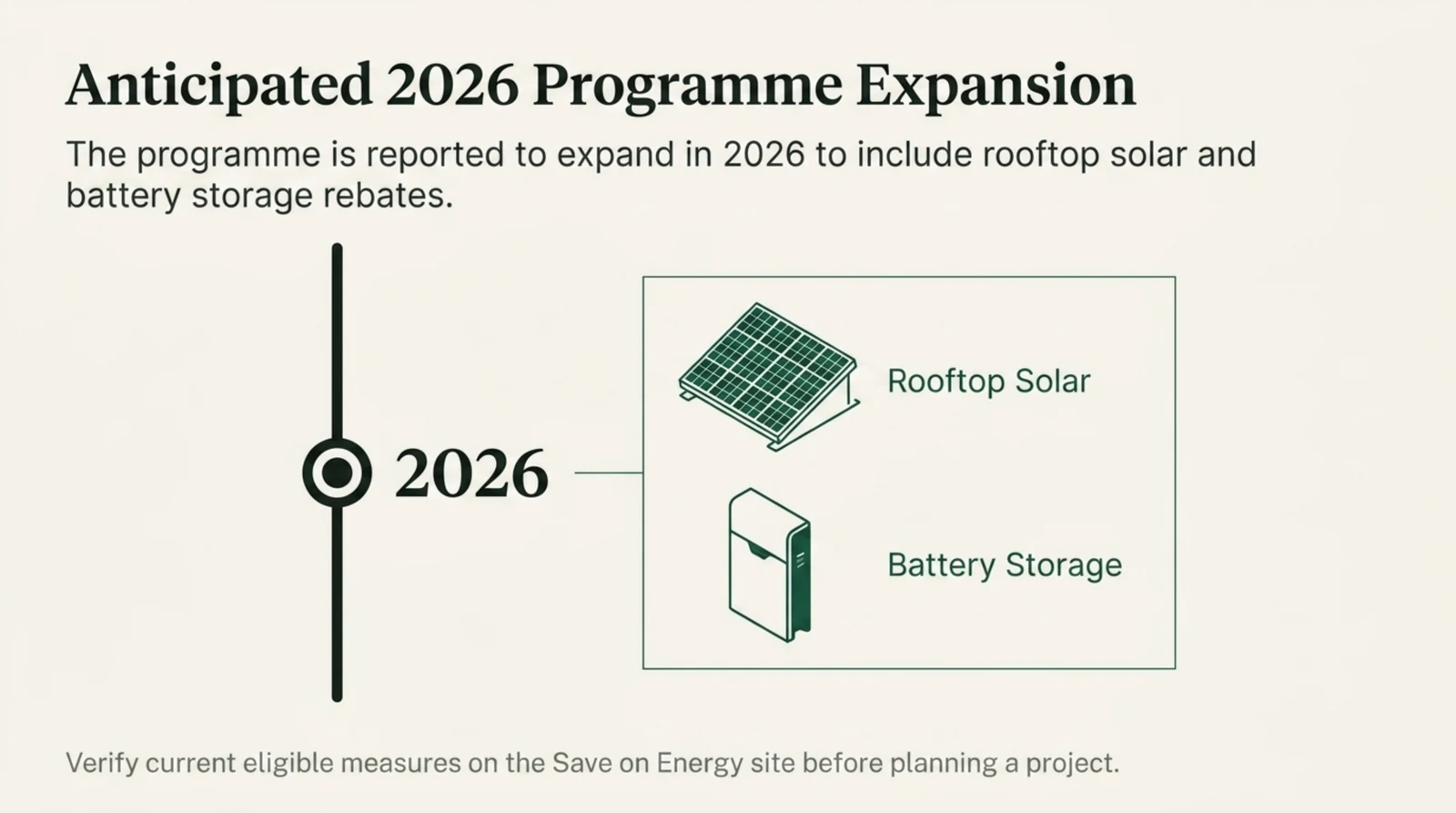
Additional measures have been reported in this stream, and the program was reported to expand in 2026 to include rooftop solar and battery storage rebates. Verify the current eligible measures on the Save on Energy site before you plan a project. Details for this stream are on our electricity, oil, propane and wood page.
Heated with natural gas? You use the Enbridge assessment stream
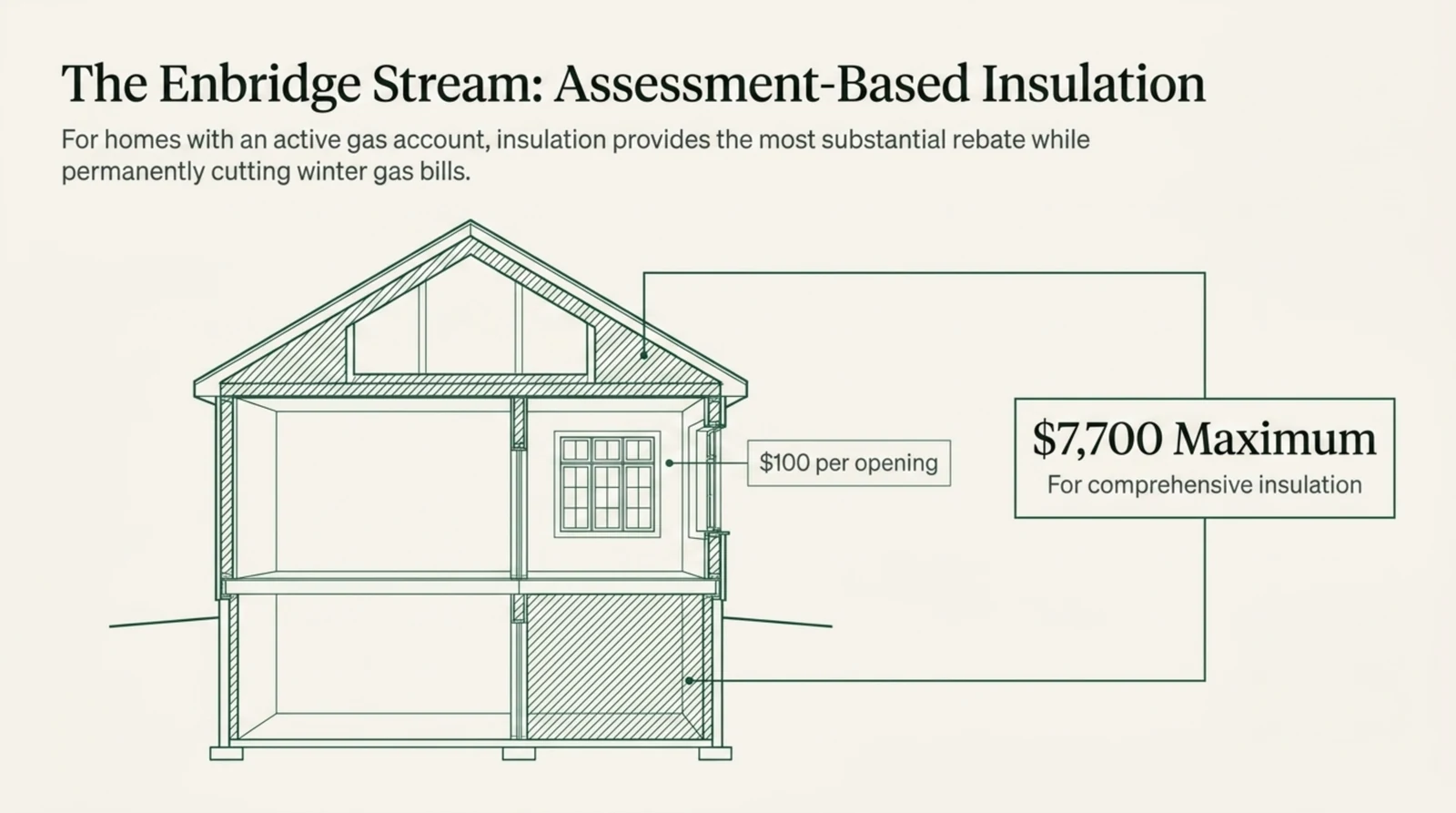
Homes with an active Enbridge natural gas account go through the assessment-based Enbridge stream instead. The verified figures there: up to $7,700 for insulation and $100 per window or door opening. The stream starts with a home energy assessment, then the upgrades, then a follow-up assessment to confirm what was done.
Insulation is the headline money in this stream: attic, wall, and basement insulation in an older northern home can claim a substantial rebate while cutting gas bills every winter afterward. Heat pump support for gas-heated homes is reported to be structured differently and smaller than the non-gas tier; verify before assuming the $7,500 figure applies to you.
One caution that catches people: work completed before the initial assessment is typically ineligible. Book the assessment first, always. Details for this stream are on our natural gas stream page.
What happened to the Canada Greener Homes Grant?
The federal Canada Greener Homes Grant closed to new applicants in early 2024. Homeowners already in the queue were processed, but there is no new federal grant intake and no announced replacement grant as of August 2026. In Ontario, Home Renovation Savings has effectively taken its place as the program to start with.
If you had been waiting for a federal grant to reopen before renovating, stop waiting: the provincial program is the live money. Federal financing arrangements for retrofits have changed over time, so check Natural Resources Canada directly for the current status of any loan offering before counting on one.
Which stream are you in?
Your primary heating fuel decides the stream. Work down this list:
- Wood stove, oil furnace, propane furnace, electric baseboard, or electric furnace as your main heat, with no gas account: you are in the electricity, oil, propane and wood stream, including the verified $7,500 heat pump tier.
- Active Enbridge gas account heating the home: you are in the assessment-based Enbridge stream, with the verified $7,700 insulation maximum.
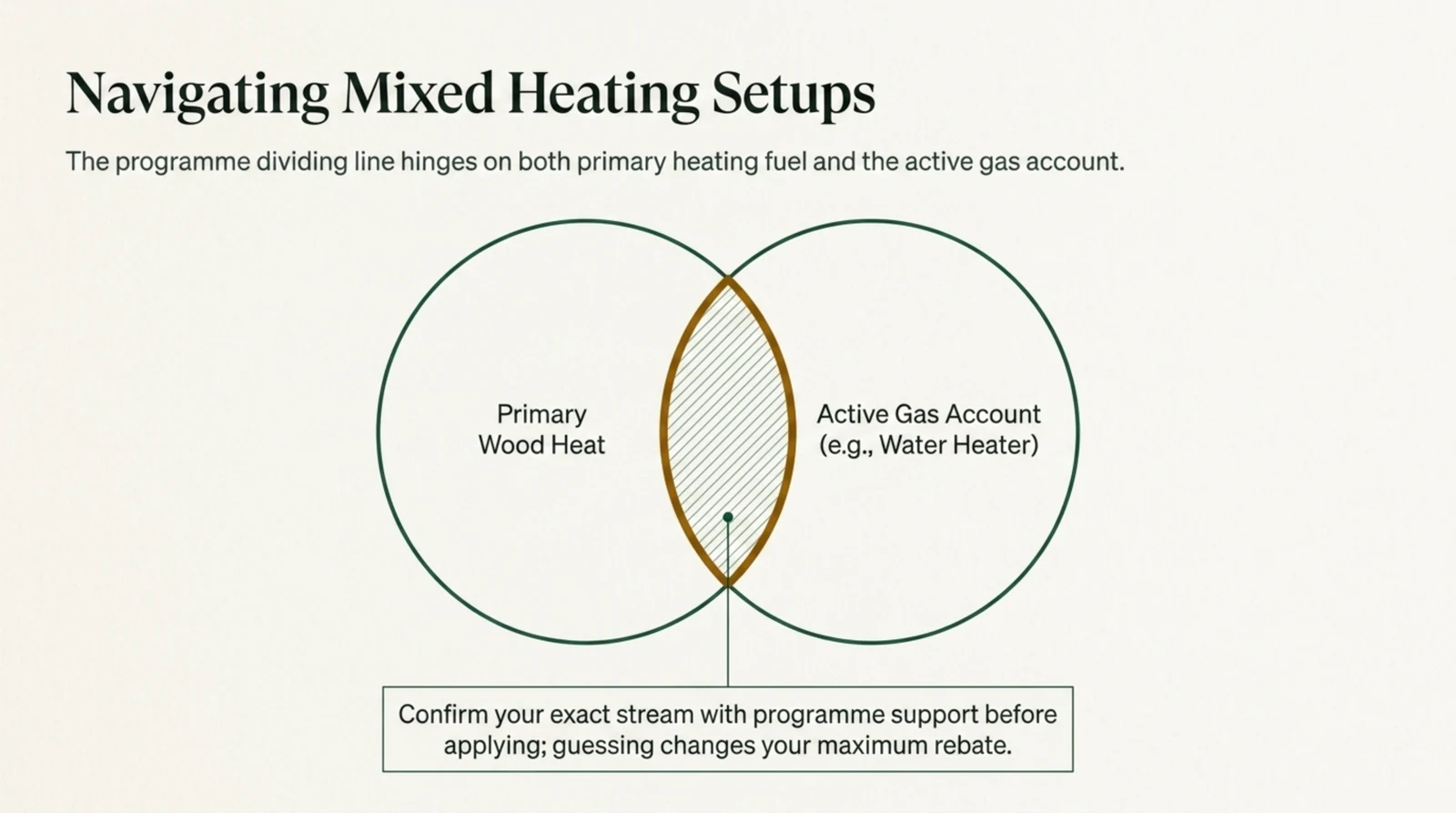
- Mixed setups, such as a gas furnace plus a wood stove, or gas service used only for a water heater: the dividing line is reported to hinge on the active gas account and primary heating. Confirm your stream with program support before applying, because it changes your maximums.
How do you apply?
The two streams apply differently. For the Enbridge stream, book the home energy assessment first through the program's registered energy advisor network, and only start work after it. For the non-gas stream, apply through Save on Energy and use a participating contractor; confirm any pre-approval requirement before you sign a contract or install equipment.
Practical steps either way: get quotes from two or three contractors and ask each whether they have completed rebate jobs under this program; confirm the specific equipment model is on the eligible list before ordering; and keep every invoice and model number. Rebates are paid after completion and paperwork, not up front, so budget the full cost and treat the rebate as recovery.
Does this stack with other property money?
Home Renovation Savings targets energy efficiency in your existing home. Several northern municipal programs pay for something different: creating new housing units. If your renovation plan includes adding a rental suite, look separately at Thunder Bay's Housing CIP, Sault Ste. Marie's Per Door Grant, or North Bay's Growth CIP housing incentive, depending on where you live. Stacking rules vary by program, so declare all funding sources on each application and confirm compatibility with each funder.