How to get grant-ready: what Northern Ontario funders ask for
Updated Oct 1, 2026 · program facts link to dataset records
What do you need before you apply?
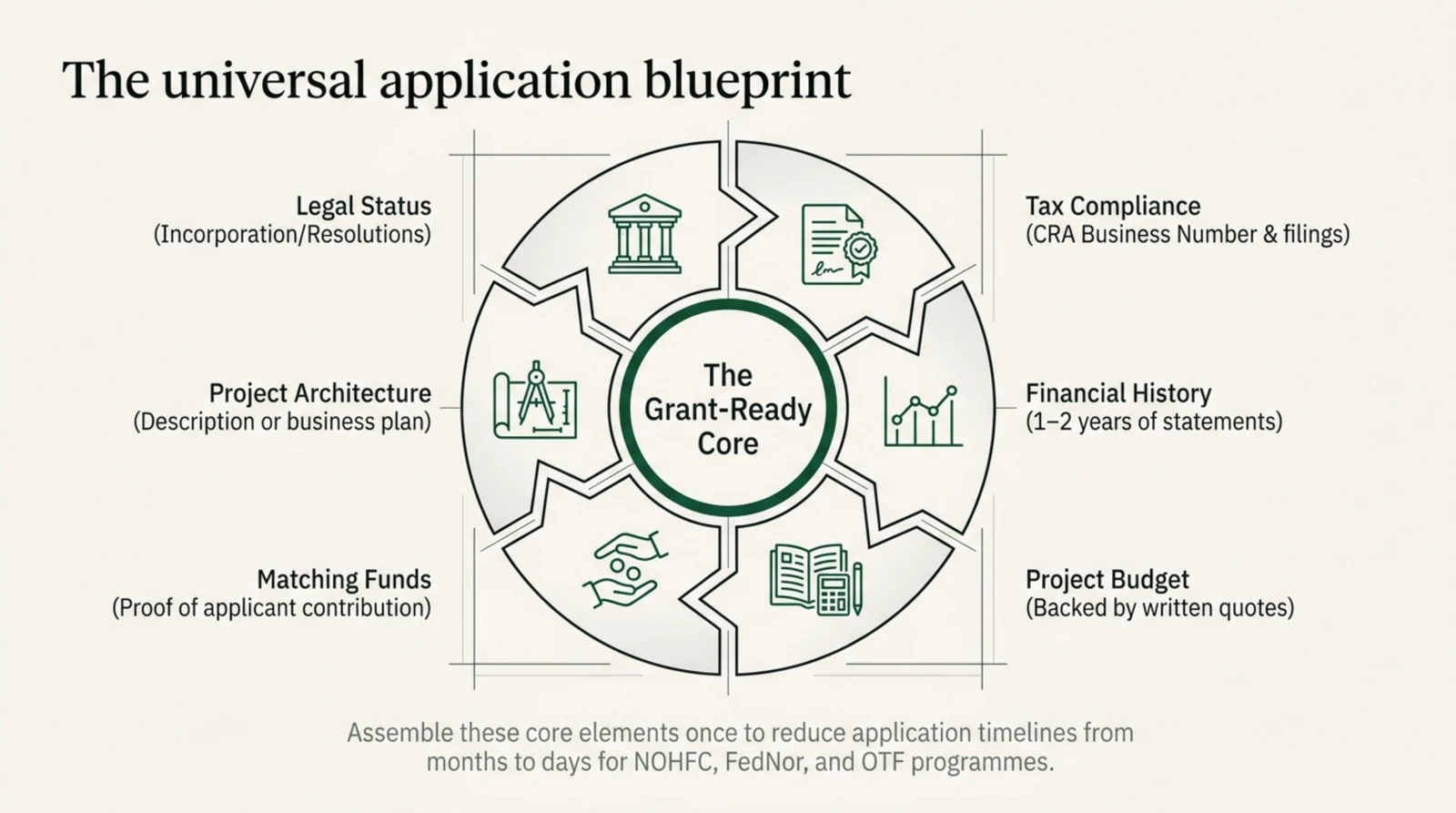
Nearly every Northern Ontario funder asks for the same core package: proof of your legal status, recent financial statements, a project budget backed by written quotes, evidence you can cover your share of the cost, and a clear project description. Assemble these once and keep them current, and most applications, from NOHFC to FedNor to OTF, become a matter of days rather than months.
The core checklist:
- Legal status documents: incorporation, business registration, or band council resolution
- CRA business number and confirmation that tax filings are up to date
- Financial statements for the last one to two years, or projections for a new venture
- A project budget with written quotes for major costs
- Proof of matching funds or financing
- A project description or business plan
- Letters of support where the program values community backing
The sections below explain each item, and where individual programs go beyond the core package.
What legal and organizational documents do you need?
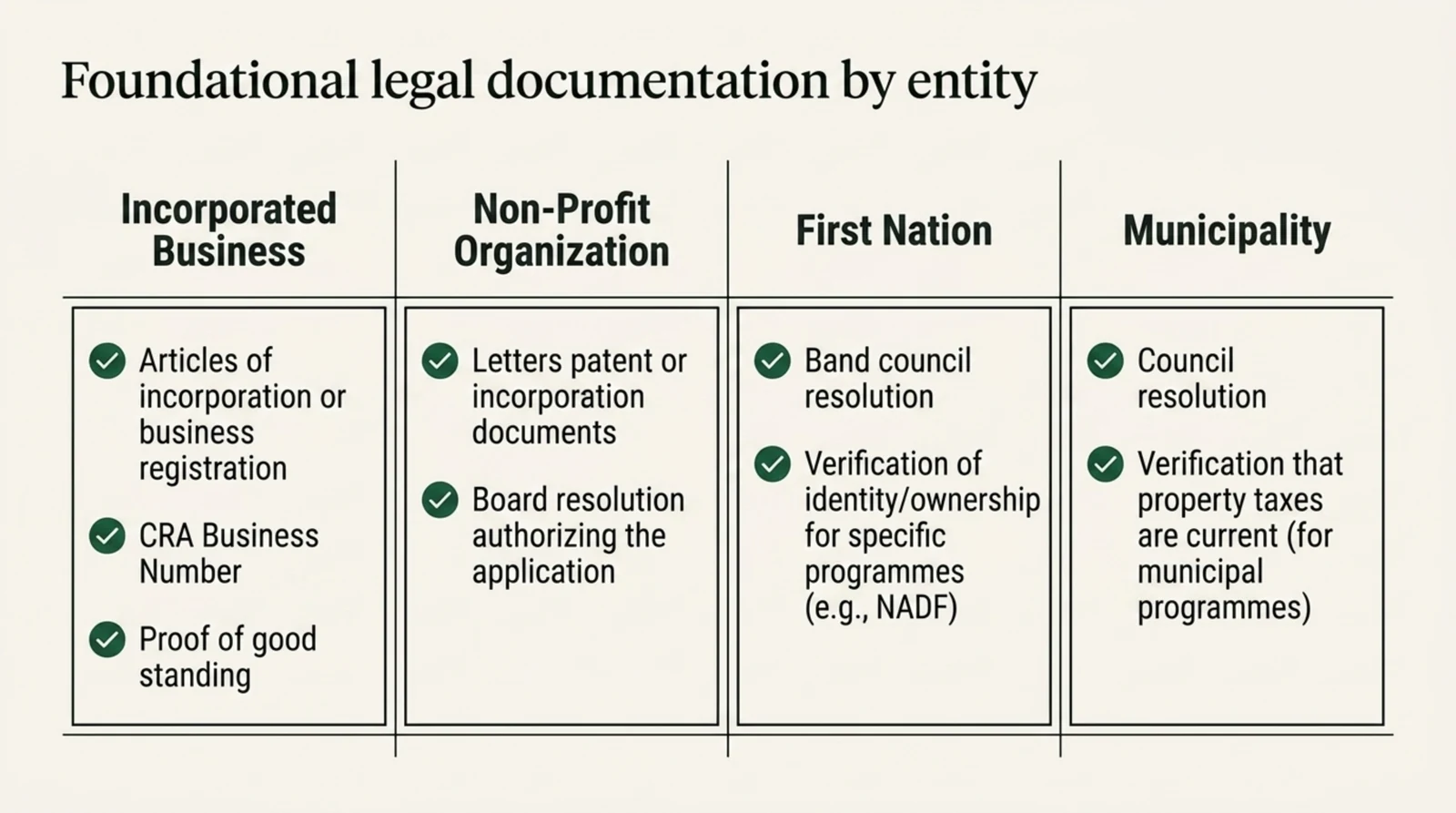
Funders need to know who they are contracting with. For businesses, that means articles of incorporation or a business registration. For non-profits, letters patent or incorporation documents and often a board resolution authorizing the application. For First Nations, a band council resolution; for municipalities, a council resolution. Most programs also ask for your CRA business number.
Points that trip applicants up:
- Incorporation is not always required. OTF's Youth Opportunities Fund funds unincorporated grassroots groups, and the Seniors Community Grant accepts unincorporated groups applying through an individual, to a maximum of $10,000. Most business funders, though, expect a registered entity.
- Indigenous programs verify identity and ownership. NADF's Indigenous Women Entrepreneurship Program requires the applicant to be an Indigenous woman aged 18 or over who owns at least 51 per cent of the business. Expect to document both citizenship or ancestry and the ownership split.
- Good standing matters. Funders commonly check that you have no outstanding defaults with them, and municipal programs such as Thunder Bay's core area grants commonly require property taxes to be current; verify each program's standing requirements.
What financial documents will you be asked for?
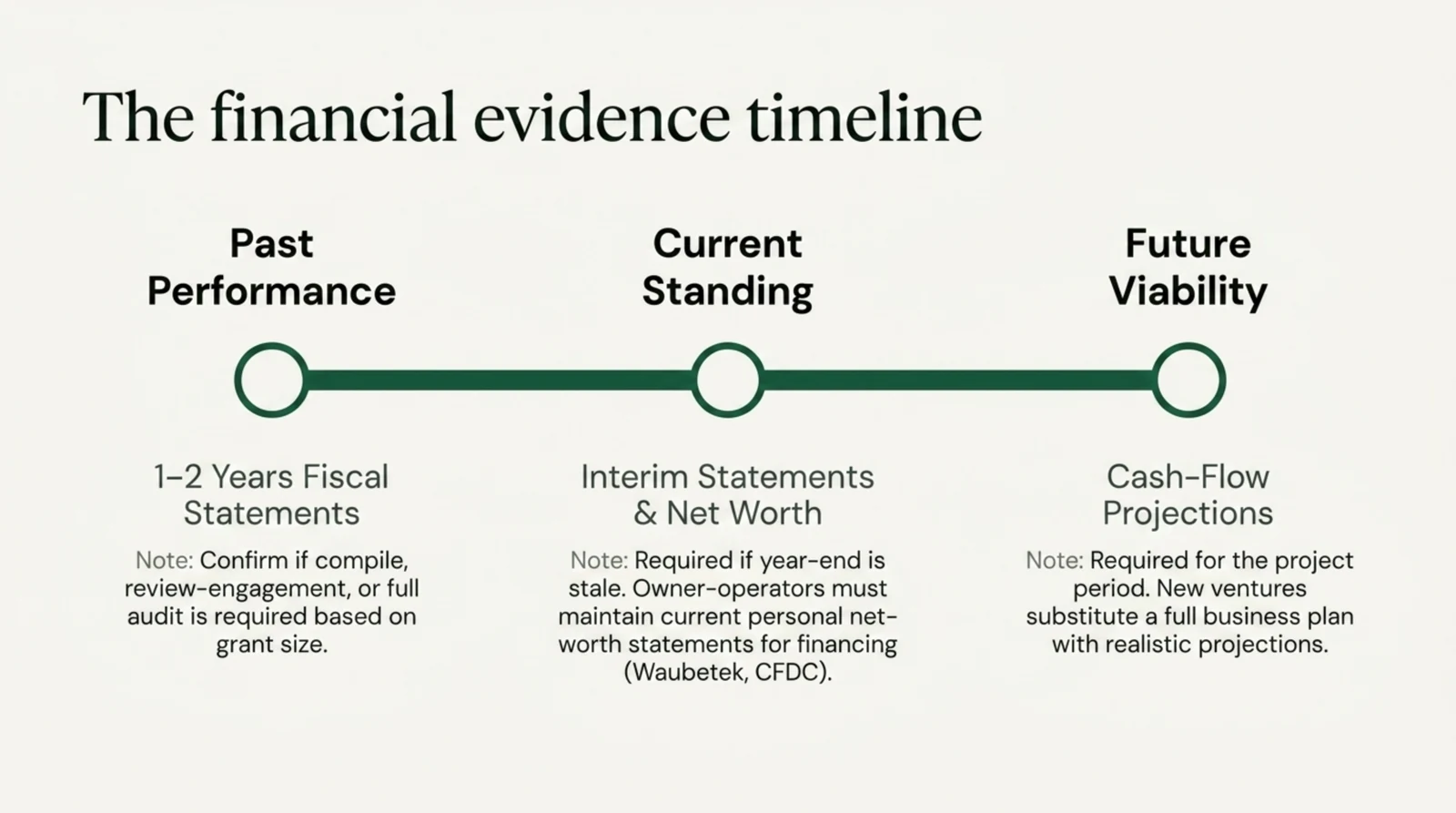
Expect to provide financial statements for the last one or two fiscal years, interim statements if your year-end is stale, and cash-flow projections for the project period. New businesses without a track record substitute a business plan with realistic projections. Financing programs such as Waubetek's Business Financing Program and CFDC business loans review these the way a bank would.
Practical guidance:
- Statements prepared by an accountant carry more weight; whether they must be audited or review-engagement level varies by program and grant size, so confirm the required level with the funder
- Keep a current personal net-worth statement if you are an owner-operator; business financing programs commonly request one
- Programs that pay on claims, which is common for conditional contribution programs such as NODP projects, expect you to carry costs and be reimbursed, so your cash flow needs to show you can bridge the gap
How should you prepare your project budget and quotes?
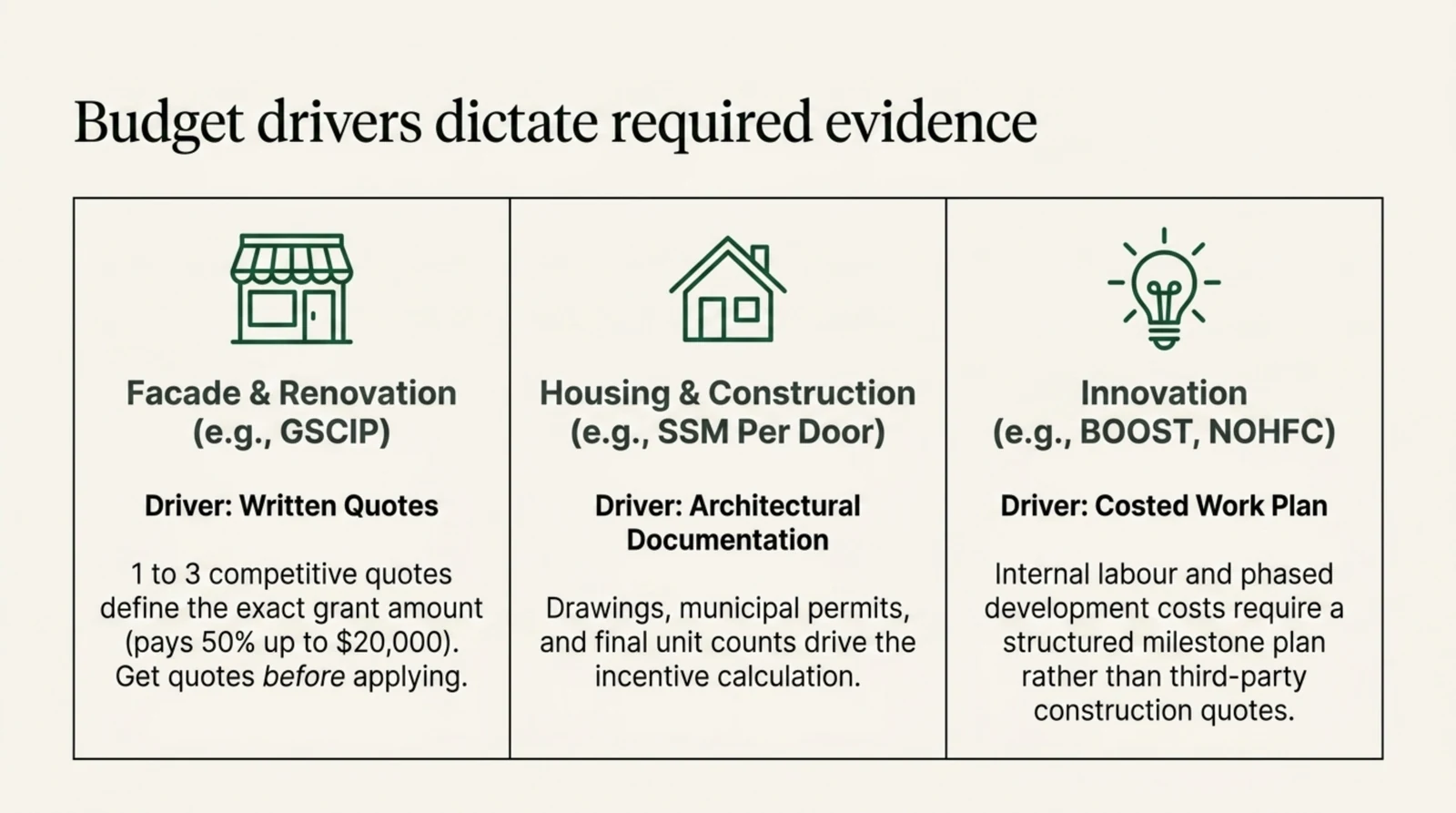
Build the budget from written quotes, not estimates. Most capital and renovation programs expect at least one written quote per major cost item, and some ask for two or three competitive quotes; verify the number each program requires. The budget should show the total project cost, the amount requested, and who covers the balance.
- For facade and renovation grants such as Greater Sudbury's facade program, which pays 50 per cent of costs to $20,000, quotes define your grant amount, so get them before applying
- For construction incentives such as Sault Ste. Marie's Per Door Grant or North Bay's housing incentive, drawings, permits and unit counts drive the calculation
- Innovation programs such as BOOST (up to $10,000) and the NOHFC Innovation Stream (up to 50 per cent of eligible costs, capped at $500,000) expect a costed work plan rather than construction quotes
- Eligible costs vary by program; costs incurred before approval are commonly excluded, so do not start work or sign contracts until you have confirmation, unless the program says otherwise in writing
Do you need matching funds?
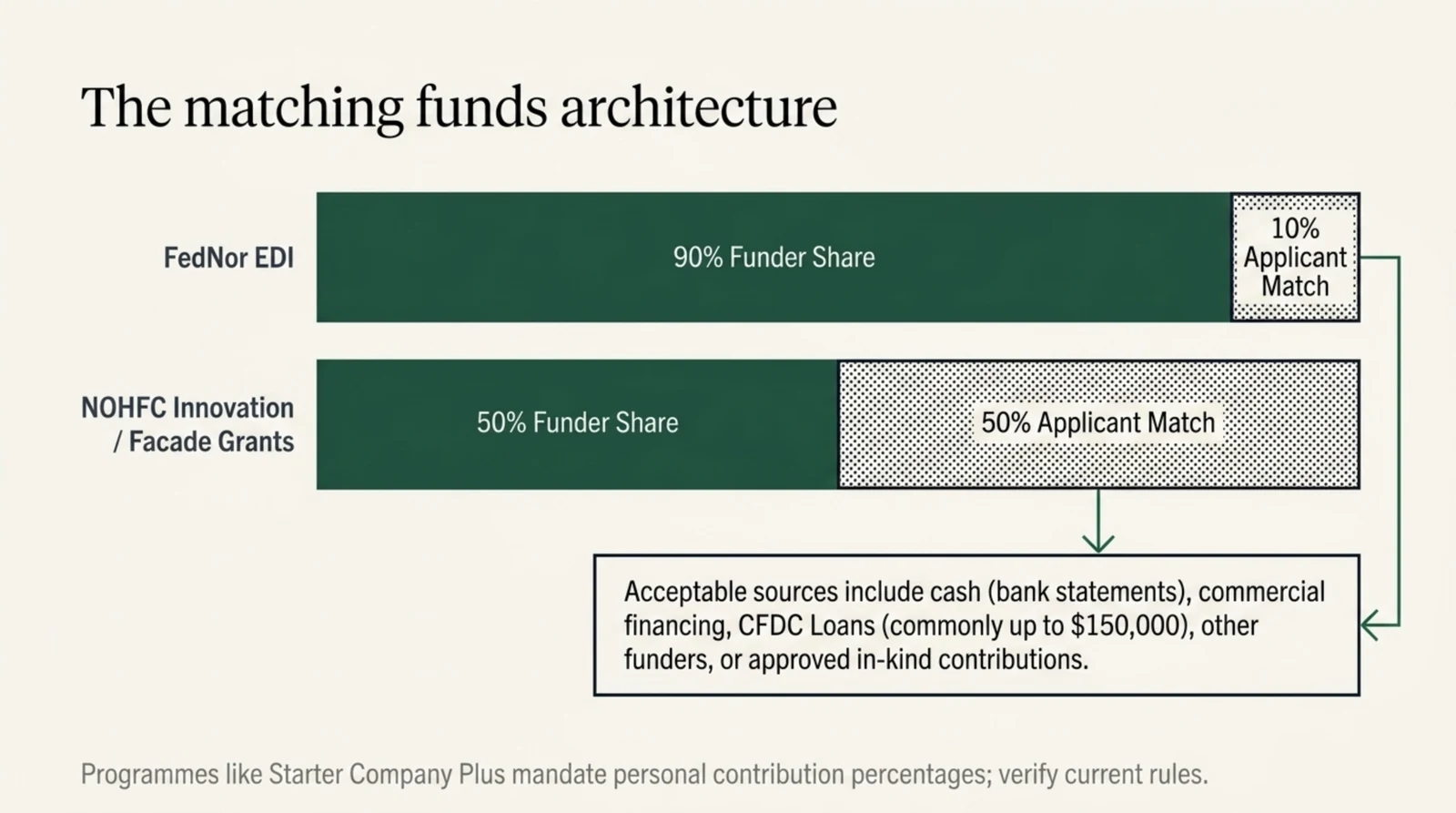
Usually, yes. Most Northern Ontario programs pay a percentage of eligible costs and expect you to cover the rest from cash, financing or, where allowed, in-kind contributions. The share varies widely: FedNor's Economic Development Initiative covers up to 90 per cent of project costs, the NOHFC Innovation Stream up to 50 per cent, and municipal facade grants commonly half.
Be ready to show where your share comes from:
- Bank statements or a line of credit confirmation for cash contributions
- A loan approval letter if you are borrowing, for example from a Community Futures Development Corporation, which commonly lends up to $150,000
- Commitment letters from any other funders participating in the project
- Evidence of any required personal contribution; Starter Company Plus, for example, requires participants to contribute toward their project (verify the current percentage with your local delivery centre)
What extra documents do specific program types require?
Beyond the core package, each program family has its own additions. Wage subsidies want job descriptions and payroll evidence, student programs want proof of enrolment, capital programs want property documents and permits, and arts programs want artistic support material. Check the program guide for these before you start the form, because they usually take the longest to obtain.
- Wage subsidies: the Student Work Placement Program, reported at 50 per cent of wages up to $5,000 per placement as of summer 2026, needs proof the hire is a post-secondary student in a related field; Canada Summer Jobs runs an annual application window with its own job-quality criteria (verify current details)
- Student entrepreneurs: Summer Company and its Timmins delivery require proof of age (15 to 29) and student status, plus a business plan
- Capital and housing programs: expect proof of ownership or a long-term lease, zoning confirmation, permits and drawings for programs like Thunder Bay's Housing CIP
- Arts programs: Northern Arts Projects and Canada Council's Explore and Create ask for artistic CVs and support material alongside the budget
- Community projects: letters of support and evidence of community need strengthen files for NOHFC community streams and OTF Seed grants
How far ahead should you start preparing?
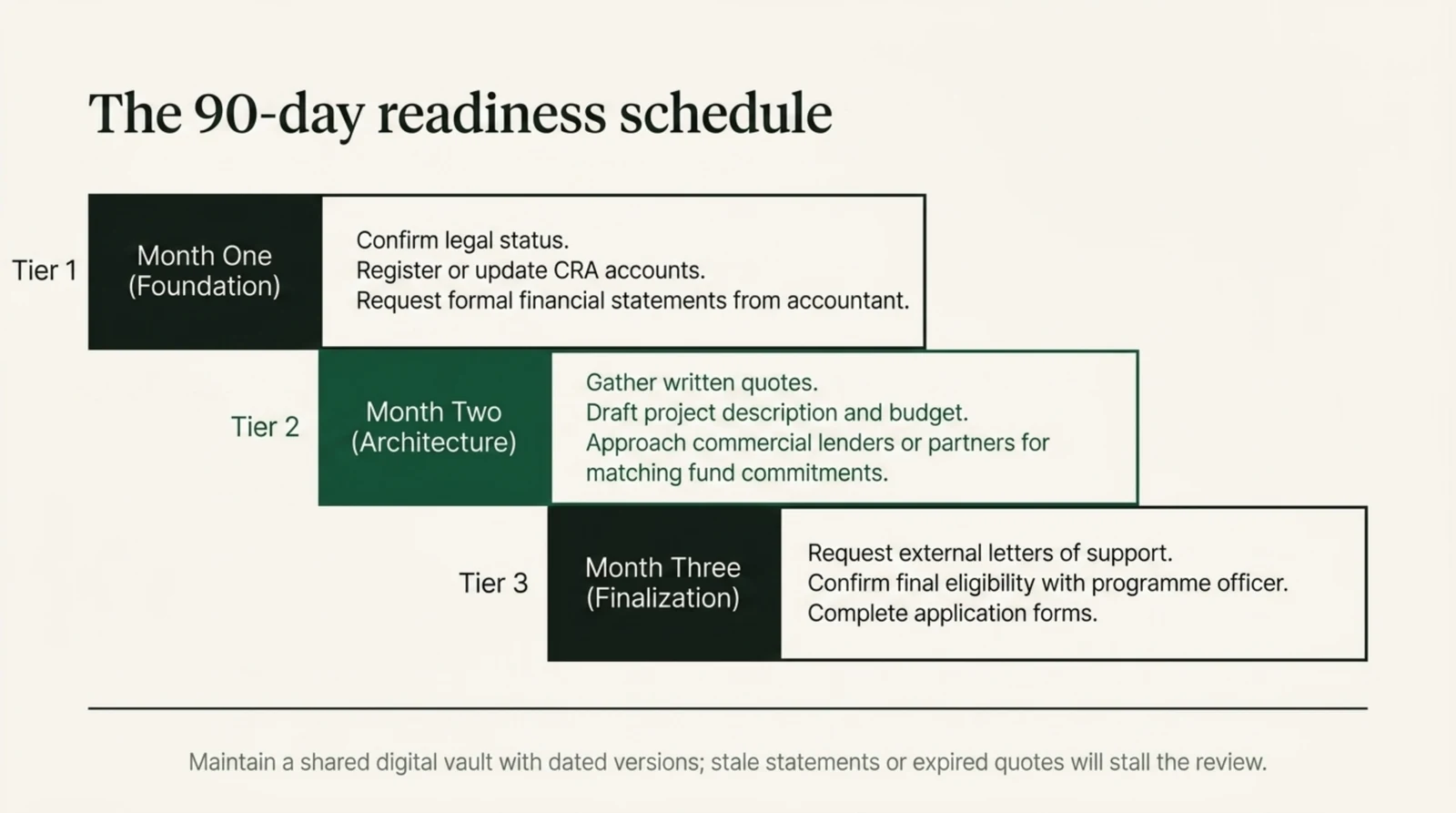
Start assembling the package at least two to three months before you want to apply. Incorporation, accountant-prepared statements, quotes and letters of support each take weeks, and some programs run fixed intake windows while others accept applications continuously. Having documents ready before a window opens is often the difference between applying this cycle and waiting for the next.
- Month one: confirm legal status, register or update CRA accounts, request financial statements
- Month two: gather quotes, draft the project description and budget, approach lenders or partners for matching commitments
- Month three: request letters of support, confirm eligibility with the program officer, complete the application
Keep the package alive after you apply. Statements go stale, quotes expire, and a funder that comes back with questions six weeks later will expect current answers. A shared folder with dated versions of each document costs little and keeps every future application faster.