How does the Northern Health Travel Grant work?
Updated Oct 1, 2026 · program facts link to dataset records
What is the Northern Health Travel Grant?
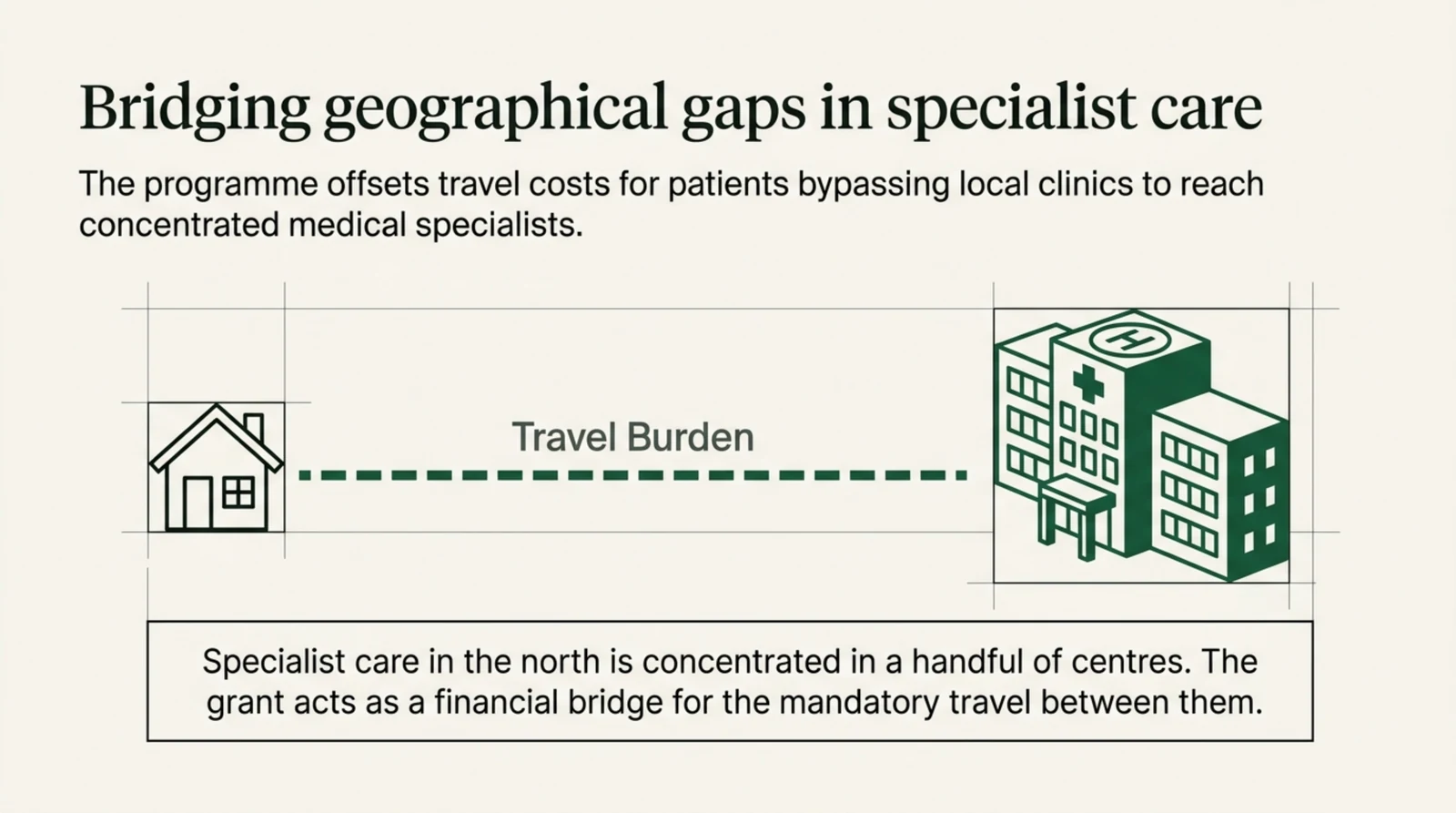
The Northern Health Travel Grant (NHTG) is an Ontario Ministry of Health program that helps pay travel costs when residents of Northern Ontario must travel 100 kilometres or more, one way, to reach the nearest medical specialist or ministry-funded health care facility. It pays 41 cents per kilometre on the eligible distance, plus a reported accommodation allowance for overnight stays, and it works as a reimbursement after you travel.
The grant exists because specialist care in the north is concentrated in a handful of centres. If you live in Marathon and your nearest cardiologist is in Thunder Bay, or you live in Kirkland Lake and your treatment is in Sudbury, the NHTG offsets part of the cost of getting there. It does not cover everything, and it pays after the fact, so plan around both of those facts. The program summary is on our Northern Health Travel Grant page.
Do you qualify? The 100 km rule and the ten eligible districts
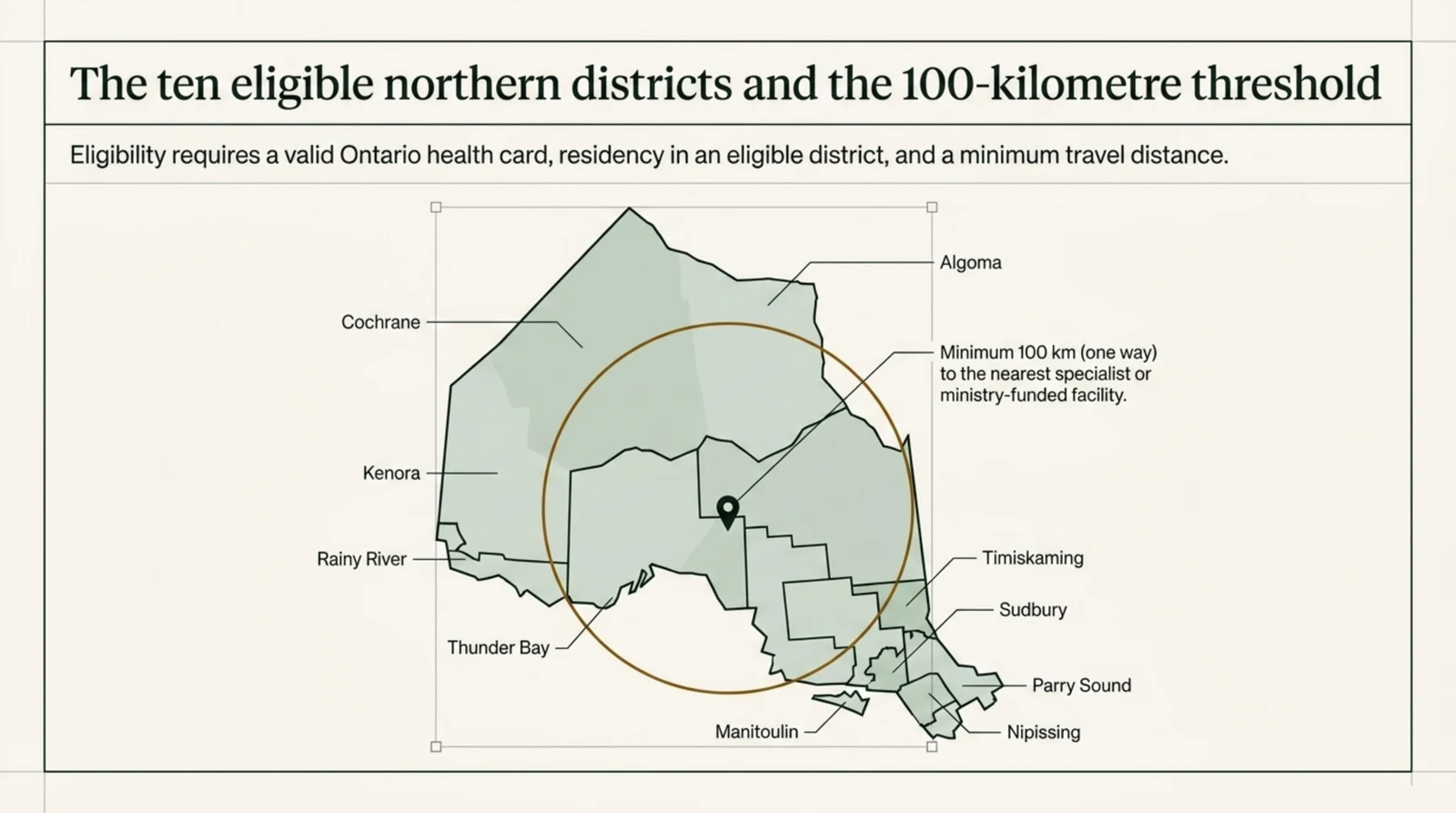
You qualify if you have a valid Ontario health card, live in one of the ten eligible northern districts, and are referred by a Northern Ontario health care provider to a specialist or ministry-funded facility at least 100 kilometres, one way, from your home. The distance is measured to the nearest provider who can deliver the care you need, not to the one you were referred to.
The districts commonly listed as eligible are:
- Algoma
- Cochrane
- Kenora
- Manitoulin
- Nipissing
- Parry Sound
- Rainy River
- Sudbury (including Greater Sudbury)
- Thunder Bay
- Timiskaming
Check the ministry's page if you live near a district boundary. The "nearest" requirement is load-bearing: if a specialist in the same field practises closer to your home, the ministry assesses your claim against that closer location, which can reduce or eliminate the grant. If a farther facility was medically necessary, ask your referring provider to document why.
How much does the NHTG pay per kilometre?
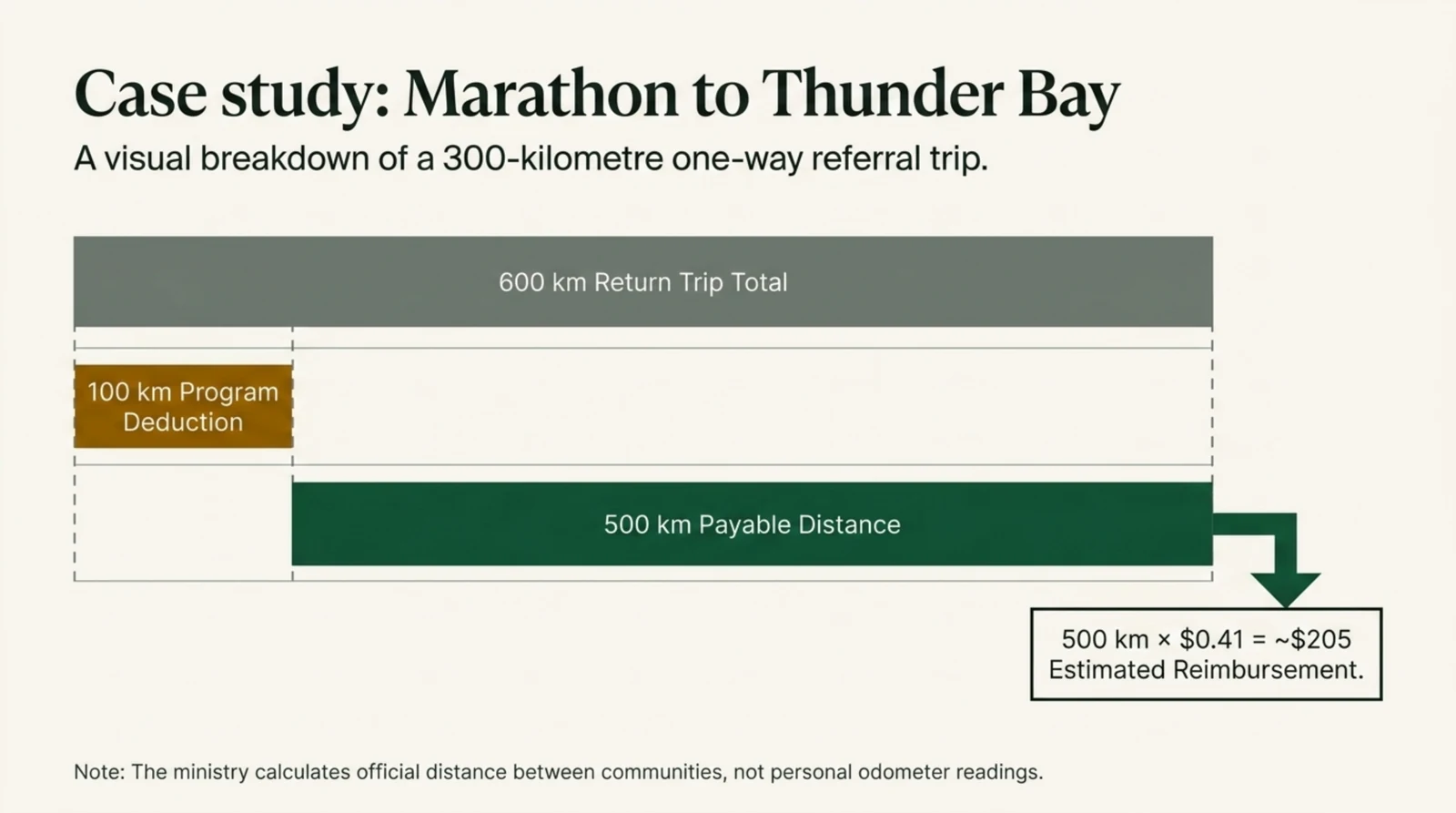
The NHTG pays 41 cents per kilometre on the eligible distance of your trip. The program is reported to deduct the first 100 kilometres of the claim, so trips just over the threshold receive relatively little while long hauls add up. An accommodation allowance, reported at $100 per eligible night up to a program cap, can apply when treatment requires an overnight stay. Verify the current figures with the ministry before you budget.
Illustration only: a Marathon resident driving to Thunder Bay, roughly 300 kilometres each way, would claim about 600 kilometres return. After a reported 100 kilometre deduction, roughly 500 kilometres at 41 cents comes to about $205. Treat that as an estimate; the ministry calculates the official distance between communities, not your odometer reading.
The travel portion is distance-based rather than receipt-based, so driving, taking the bus, or getting a ride generally pay out the same. Air travel from remote communities is reported to be handled differently; verify with the ministry. Keep accommodation receipts regardless.
How do you apply using the online form?
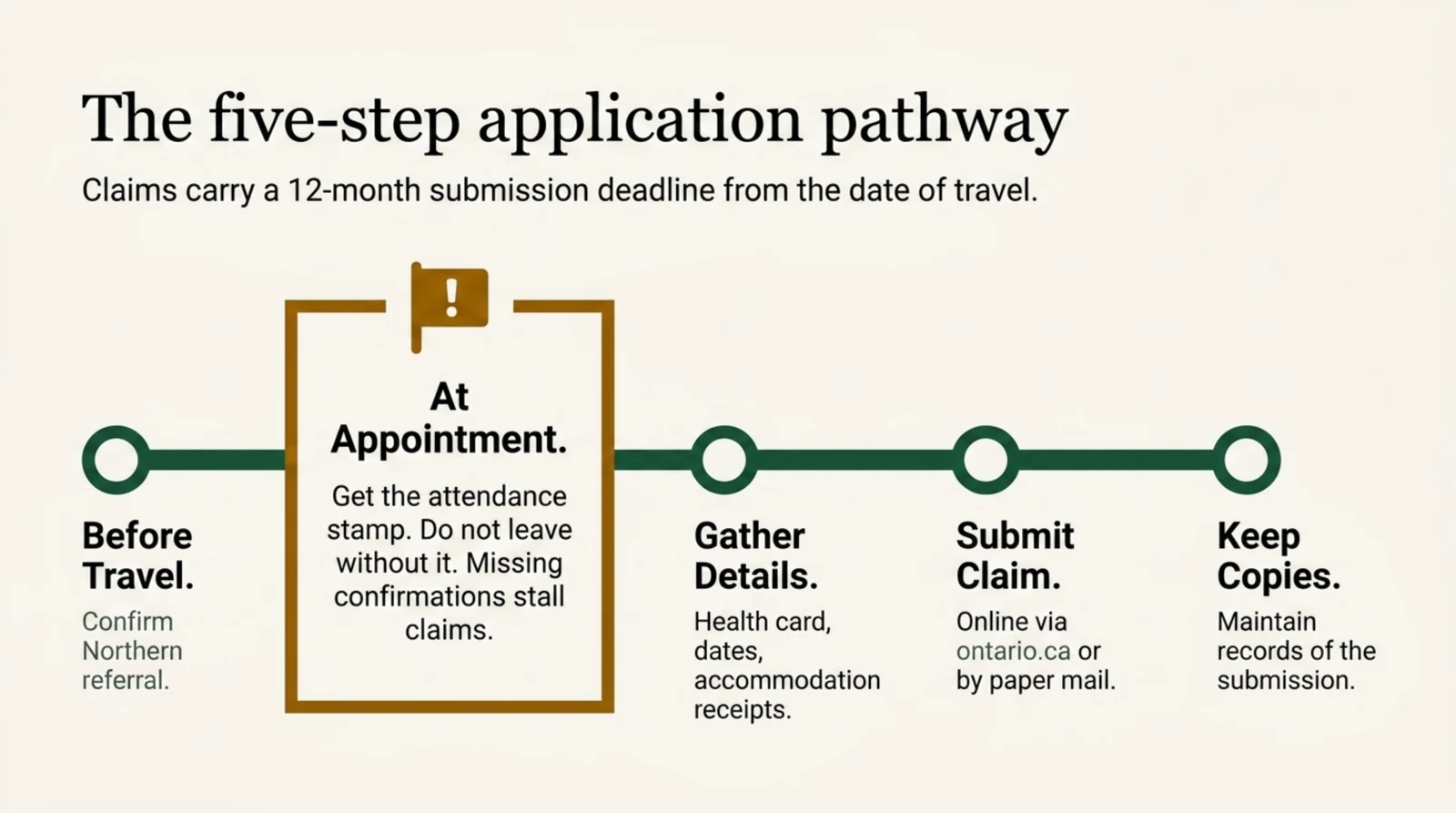
Ontario is reported to have introduced an online NHTG application in 2025, running alongside the traditional paper form. The structure is the same either way: you complete the applicant section, the specialist or facility confirms your attendance, and you submit the claim after the appointment. The steps that matter:
- Before you travel, confirm your referral comes from a Northern Ontario health care provider and record the referring provider's name and details.
- At the appointment, have the specialist's office complete or stamp the practitioner and attendance portion of the form. Do not leave without it. A missing attendance confirmation is one of the most common reasons claims stall.
- Gather your details: health card number, home address, appointment dates, and accommodation receipts if you are claiming a stay.
- Submit the claim through the NHTG page on ontario.ca, uploading the required confirmations, or mail the paper form if you prefer.
- Keep copies of everything. Claims are reported to carry a 12 month submission deadline from the date of travel; verify the current deadline rather than assuming you have time.
How long does reimbursement take?
Expect weeks at minimum, and plan for longer. The ministry has historically advised allowing several weeks for processing, and patients in northern communities commonly report waits of one to three months when the program is backlogged. Nothing about the grant is instant, so do not budget a trip around a quick payment.
Three things shorten the wait: submit promptly after each trip rather than batching claims, make sure the practitioner section is fully completed before you submit (incomplete claims get returned by mail, which restarts the clock), and follow up through the contact channels on the ministry's program page if your claim has been outstanding well beyond the stated timeline.
Can you get money in advance?
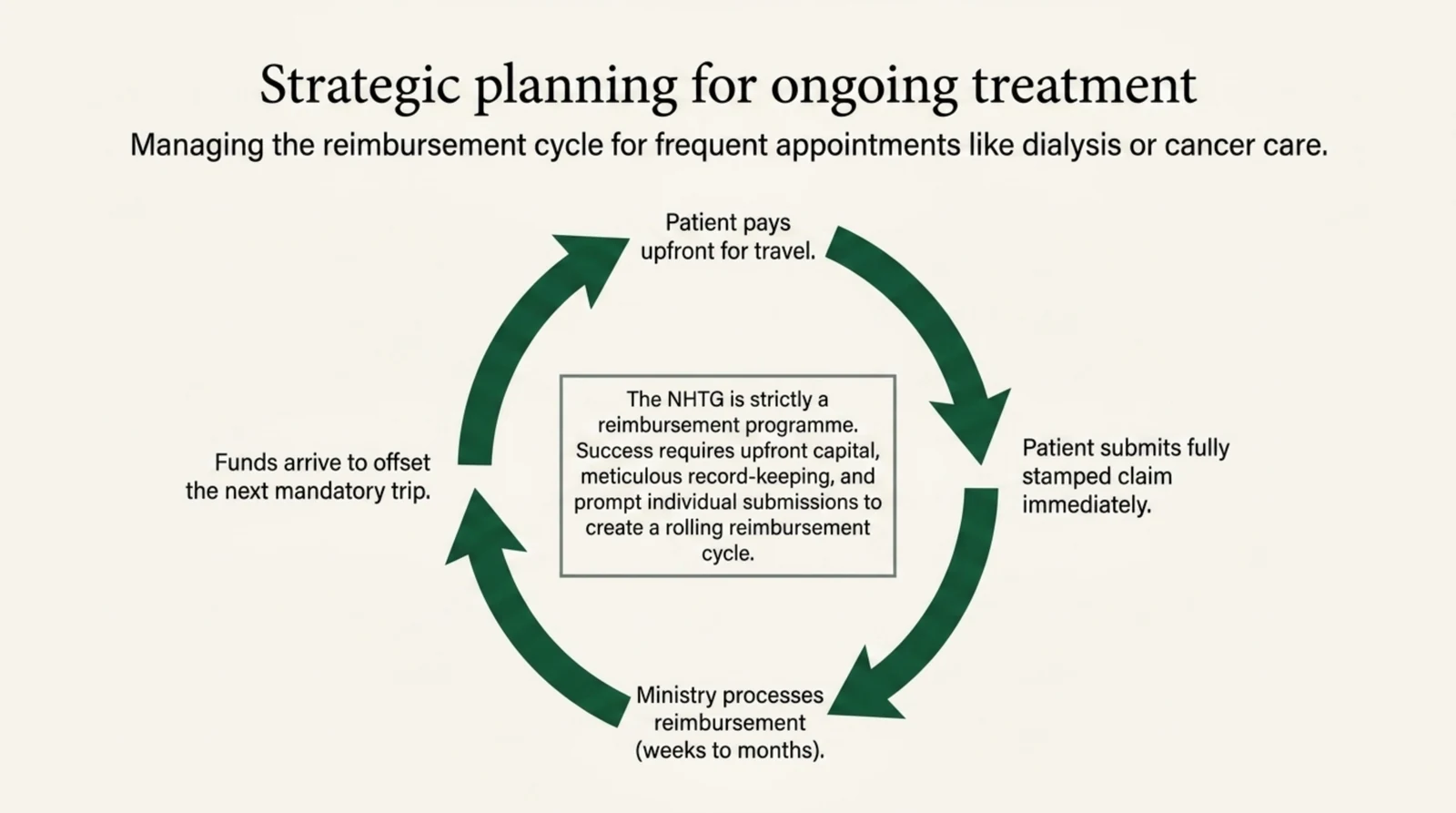
There is no standard advance payment. The NHTG is a reimbursement program: you pay for the travel first and claim it back. For patients making frequent trips, such as dialysis or cancer treatment, the practical approach is to claim every eligible trip promptly so that reimbursements start cycling in behind your travel costs.
If paying up front is a genuine barrier, two avenues are worth asking about. Hospital social work departments often know of charitable travel supports available to patients in their region. First Nations community members may also have medical transportation benefits administered through their community; ask the community health office what exists before assuming the NHTG is the only support. Note that student travel from remote First Nations to school is a separate program entirely; see the Ontario Indigenous Travel Grant and verify its current status.