How do NOHFC internships work for employers?
Updated Oct 1, 2026 · program facts link to dataset records
Who applies: the employer or the intern?
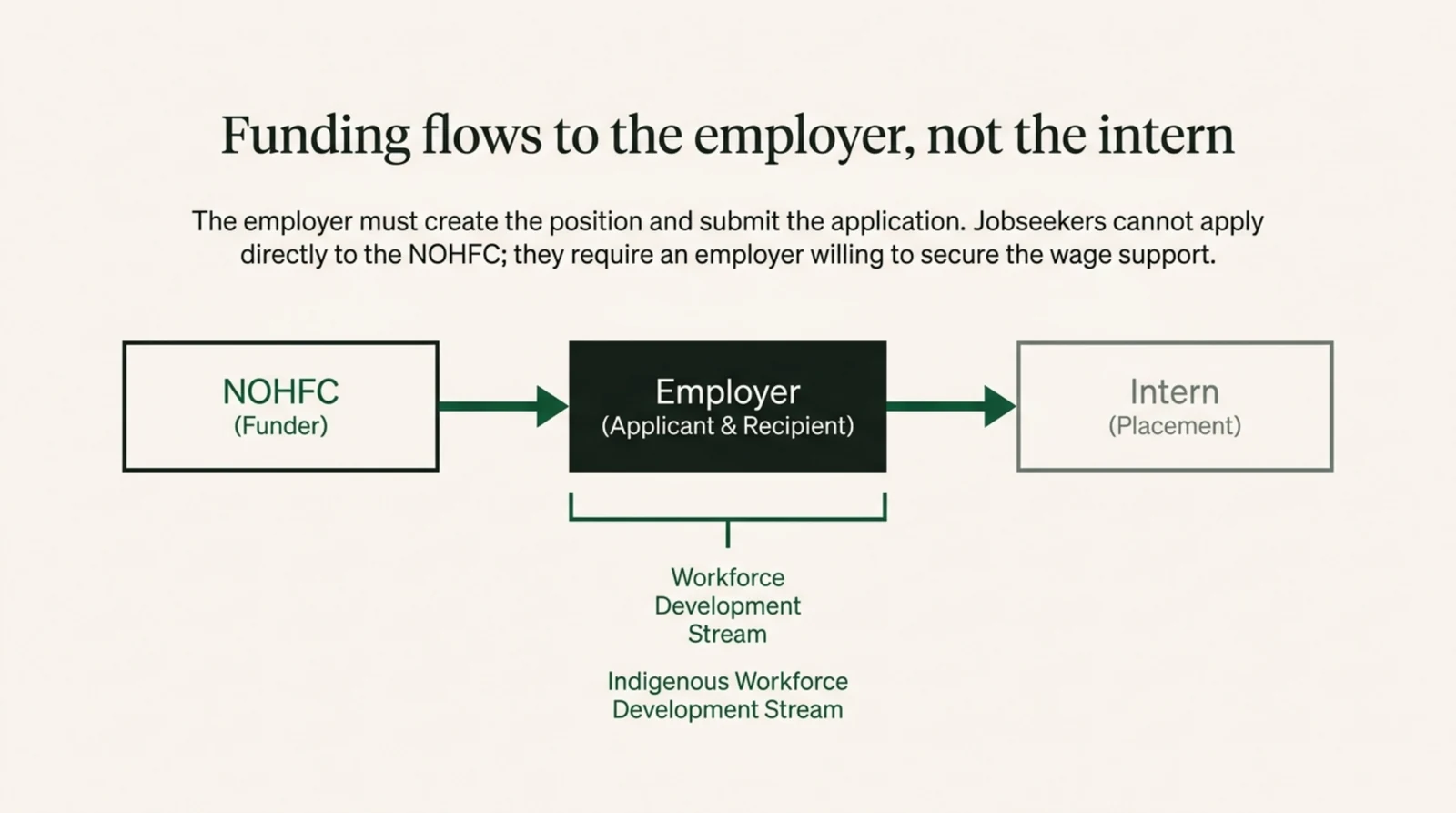
The employer applies. Funding under the NOHFC Workforce Development Stream is paid to the organization that creates the internship position, not to the person who fills it. If you are a graduate looking for a placement, you cannot submit an application to NOHFC yourself; you need an employer willing to apply. If you are an employer, the program subsidizes the cost of hiring a new intern for a defined placement in Northern Ontario.
NOHFC runs a parallel Indigenous Workforce Development Stream for internships that support Indigenous talent. The mechanics are the same: the employer applies, the position sits in Northern Ontario, and the funding offsets the intern's salary. These two streams are the main wage support NOHFC offers, and both work on the same apply-first, hire-second logic described below.
How much does NOHFC cover?
NOHFC internship support is commonly reported at around half of an intern's salary and benefits for a one-year, full-time placement, with a cap per position in the low tens of thousands of dollars, and a higher reported rate for not-for-profit employers and under the Indigenous stream. These figures have shifted between intakes, so treat any number on a third-party site as indicative and confirm the current rate and cap on NOHFC's own program pages before you budget.
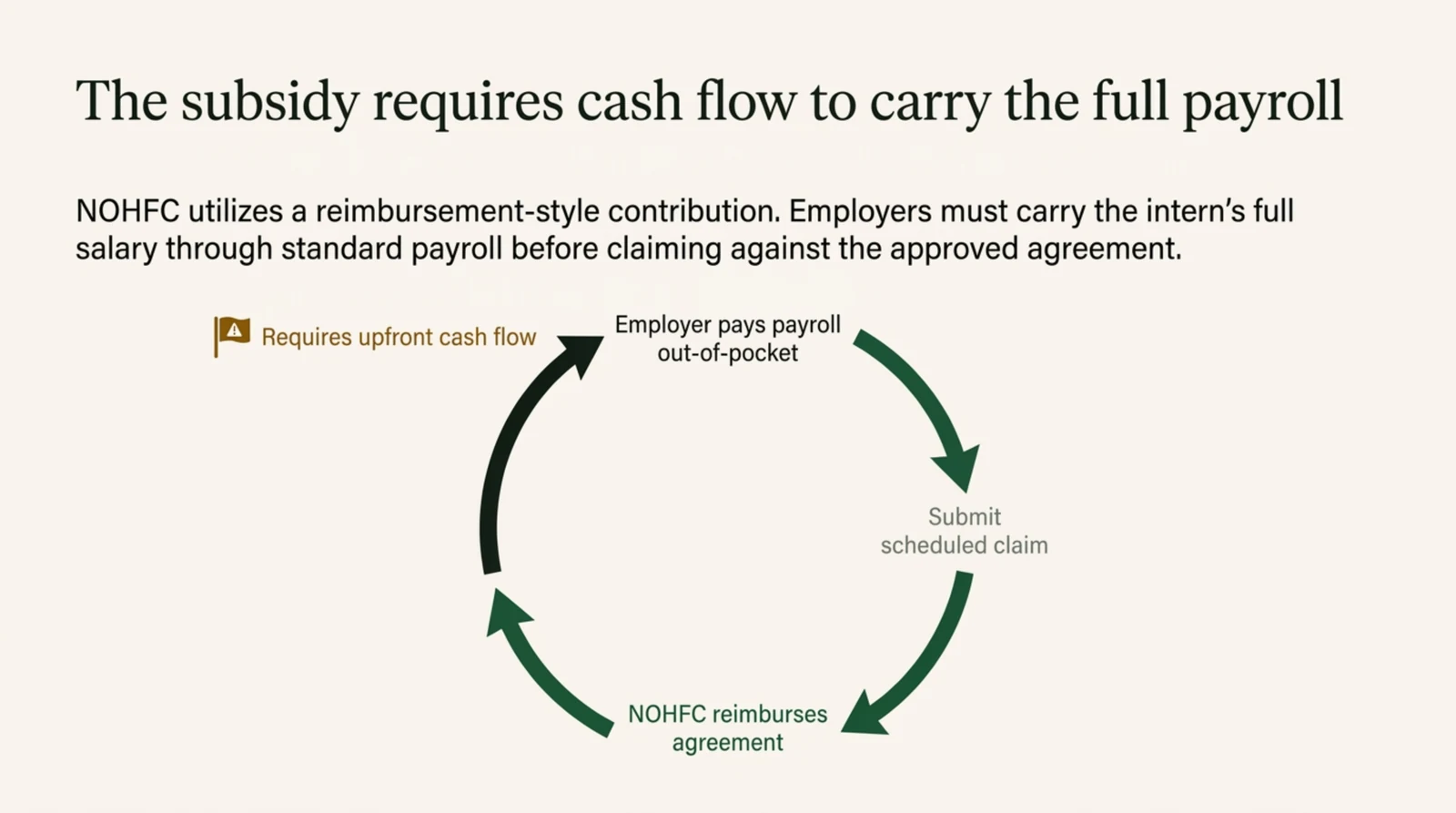
Two budgeting points follow from the structure. First, the support is a reimbursement-style contribution: you pay the intern through your normal payroll and claim against your approved agreement, so you need the cash flow to carry the full salary in the meantime. Second, the cap applies per position, so a higher salary does not increase the subsidy beyond the ceiling; it increases your share.
Why should you apply early in the year?
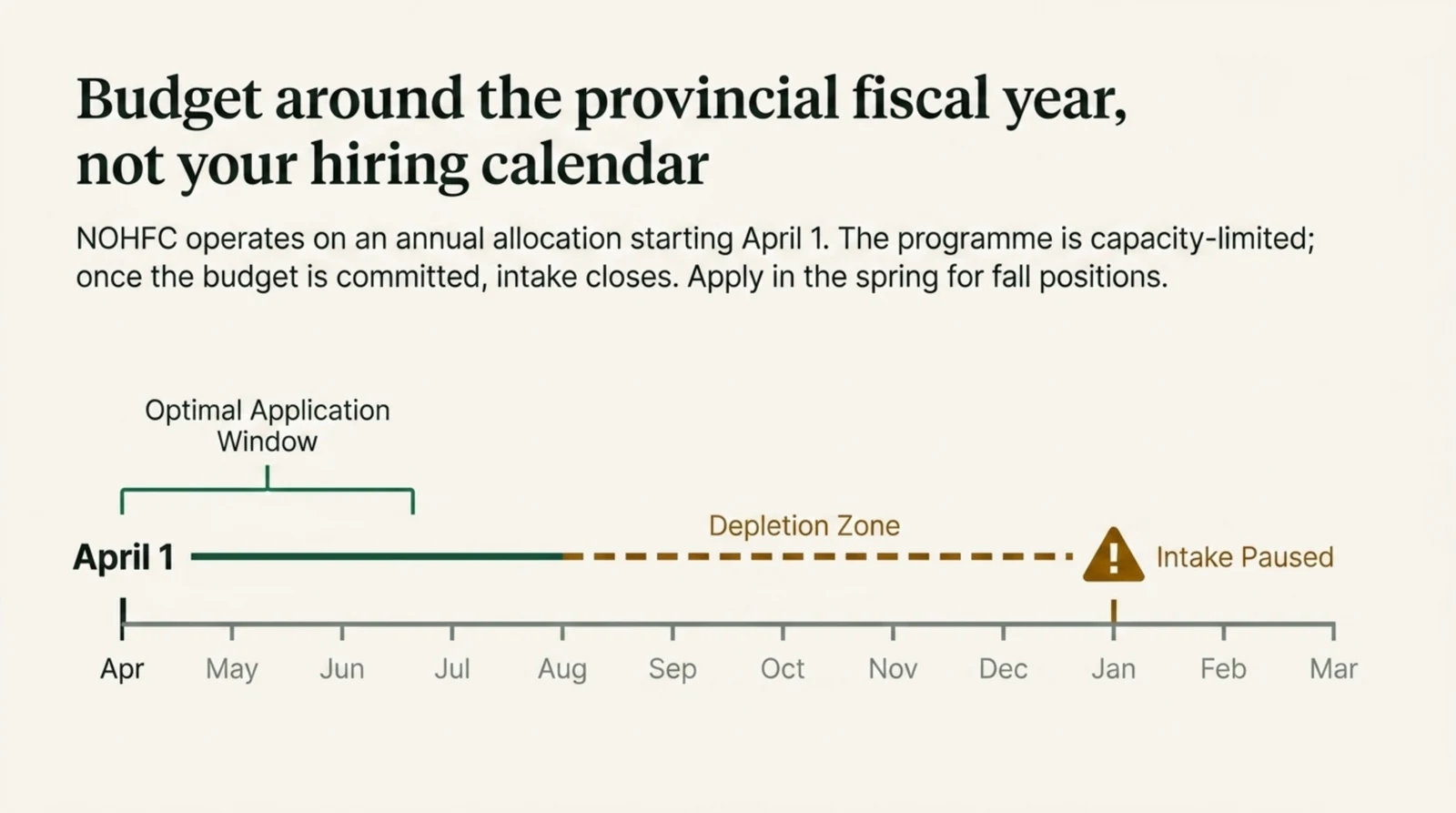
Because the money runs out. NOHFC internship funding operates on an annual allocation, and intake has been reported as capacity-limited: once a year's budget is committed, NOHFC has paused or closed intake rather than approving positions it cannot fund. Employers who apply in the first months of the provincial fiscal year, which begins April 1, have generally had the best odds of finding room in the allocation.
Practical consequences:
- Plan internship hiring around the fiscal year, not your own hiring calendar. If you know you will want an intern in the fall, apply in the spring.
- Do not treat the program as always open. Check NOHFC's site for the current intake status before promising a role to a candidate.
- If you miss the window, the federal wage subsidies listed at the end of this guide are the fallback while you wait for the next intake.
Which employers are eligible?
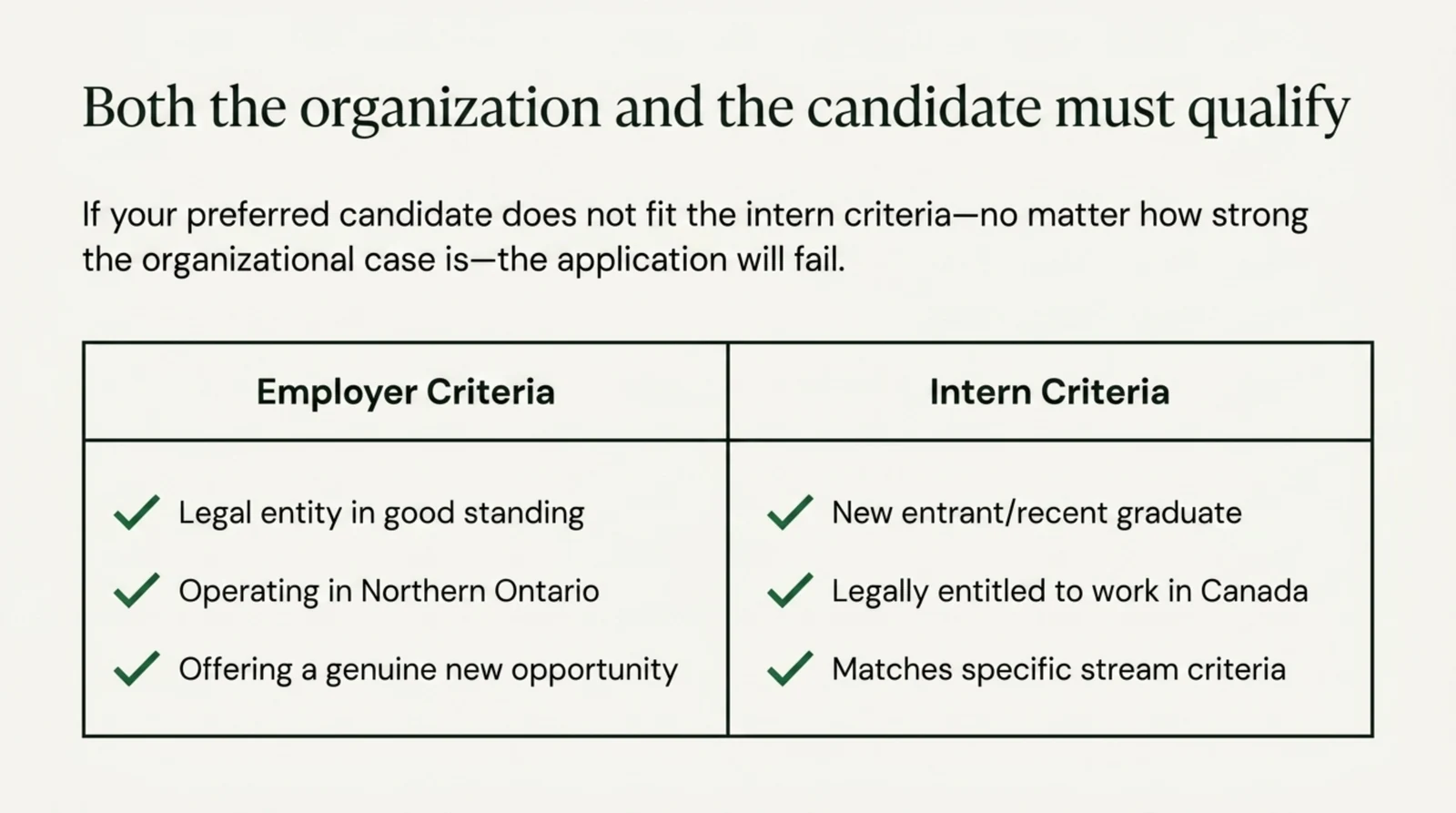
Eligibility is broad by design: private-sector businesses, municipalities, Indigenous communities and organizations, and not-for-profits operating in Northern Ontario have all been funded through the internship streams. The constants are that the employer must be a legal entity in good standing, the position must be located in Northern Ontario, and the placement must be a genuine new opportunity rather than a re-badged existing job. Confirm the current eligibility list with NOHFC, since stream rules are updated periodically.
The intern side has rules too, and employers should screen for them before shortlisting. NOHFC internships have generally been aimed at new entrants to the workforce, typically recent graduates taking a first professional role in their field, who are legally entitled to work in Canada. If your preferred candidate does not fit the intern criteria, the application fails no matter how strong your organization's case is, so read the current criteria before you recruit.
How does the application process work?
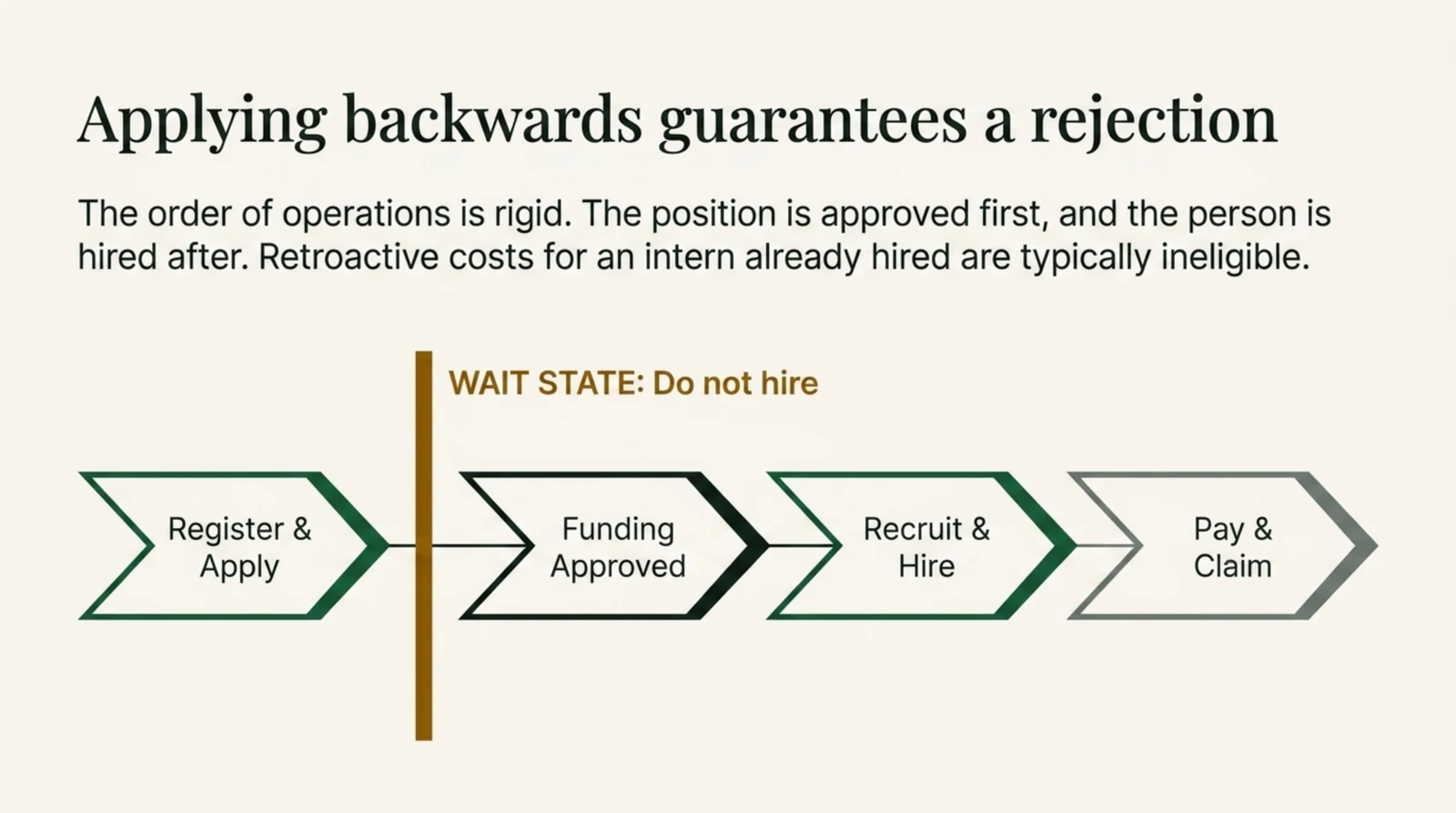
The order of operations matters more in this program than the paperwork. The position is approved first; the person is hired after. Employers who recruit an intern and then seek funding are applying backwards, and retroactive costs are generally not eligible. The reported sequence:
- Register and apply through NOHFC's online application portal, describing the position, the mentorship and training plan, and the budget.
- Wait for a funding decision. Do not extend an offer conditional on funding you do not yet have.
- Once approved, recruit and hire a candidate who meets the intern eligibility rules.
- Pay the intern through normal payroll, then claim reimbursement under your contribution agreement on NOHFC's schedule.
- Report on the placement as required, including outcomes at the end of the term.
Decision timelines vary with intake volume. Verify current processing expectations with NOHFC staff and build slack into your intended start date, especially if the role is tied to a season or a project deadline.
For jobseekers: how do you get an NOHFC-funded internship?
You get one through an employer, so your job is to find employers, not application forms. Three practical routes work. First, search job boards for postings that mention NOHFC or the Northern Ontario Heritage Fund; funded positions usually say so. Second, approach employers you want to work for and tell them the subsidy exists. Smaller organizations in the North often have the work but not the budget line, and a candidate who arrives with the funding route already mapped is easy to say yes to. Third, if you are an Indigenous jobseeker, name the Indigenous Workforce Development Stream specifically, since the reported subsidy rate is higher and that changes an employer's math.
Check your own fit before pitching: these placements have generally targeted recent graduates entering their field for the first time, legally entitled to work in Canada, and able to work in Northern Ontario for the full term. Verify the current intern criteria on NOHFC's site so you do not pitch a placement you would not qualify for.
What are the alternatives if NOHFC is at capacity?
Three federal wage supports cover similar ground. The Student Work Placement Program subsidizes hiring post-secondary students for placements related to their studies, reported at 50 per cent of wages up to $5,000 per placement as of summer 2026. Canada Summer Jobs funds summer positions for young people, with subsidy rates that differ between private and not-for-profit employers; verify current rates with Service Canada. FedNor's youth internships fund placements mainly with not-for-profits and economic development organizations in Northern Ontario; check FedNor's current intake before planning around it.
The fit differs in each case: SWPP requires a current student rather than a graduate, Canada Summer Jobs is seasonal, and FedNor's internships suit community organizations more than private firms. None is a perfect substitute for a year-long NOHFC placement, but each can keep a hiring plan alive until the next NOHFC intake opens.