How to decode grants, loans and conditional contributions
Updated Oct 1, 2026 · program facts link to dataset records
Why does the label on the money matter?
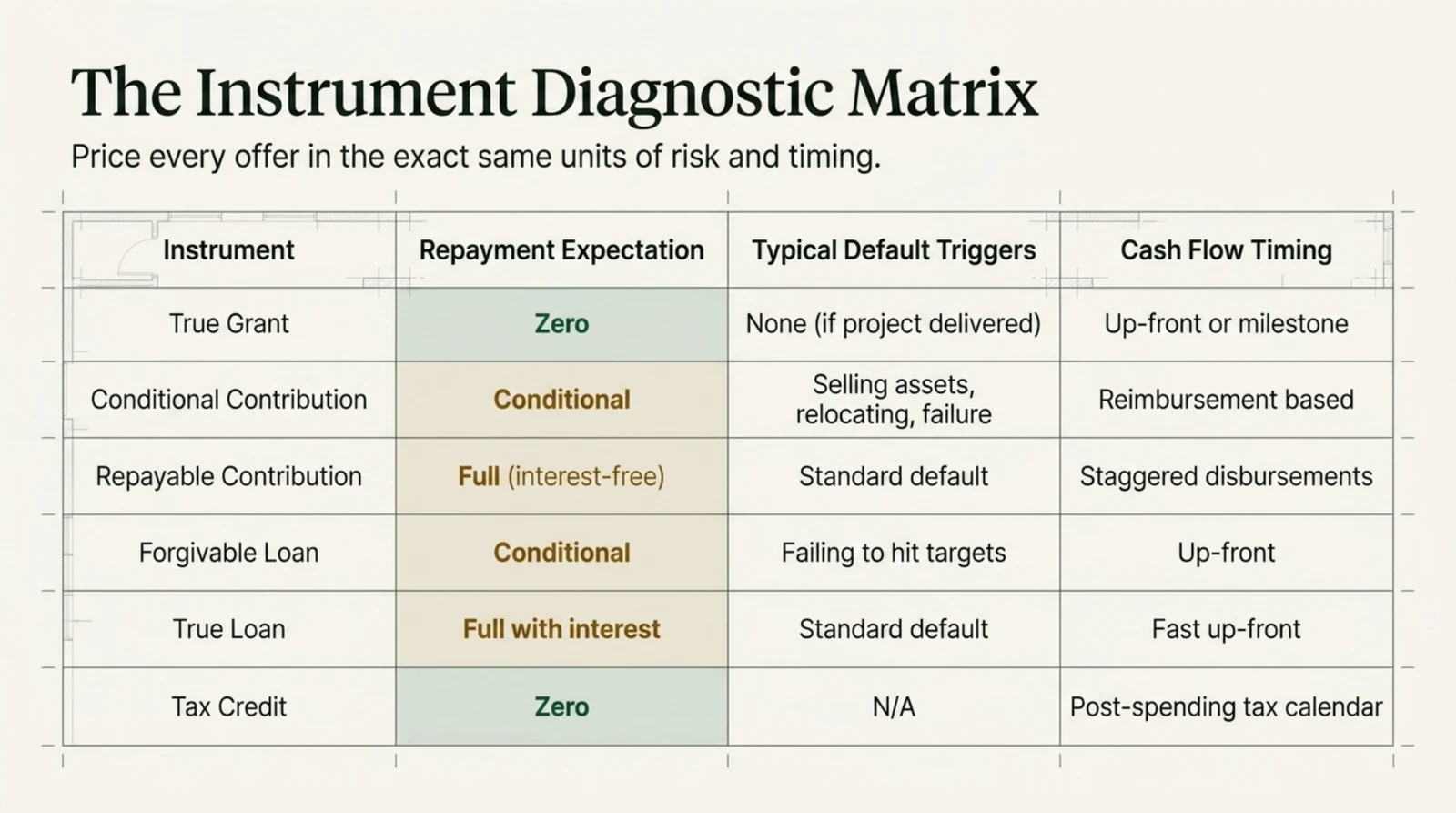
Because the word grant is used loosely, and the instrument behind it decides whether you ever repay, what conditions you must hold for years afterwards, and what happens if the project falls short. Two programs can advertise the same dollar figure while one is money you keep on completion and the other is a loan with conditions attached.
Northern Ontario funding uses a small set of recurring instruments: true grants, conditional contributions, repayable contributions and loans, forgivable loans, plus tax credits, rebates, wage subsidies and mixed packages. This guide defines each one with local examples, then covers the NOHFC agriculture split and what to check before signing any agreement.
What is a true grant?
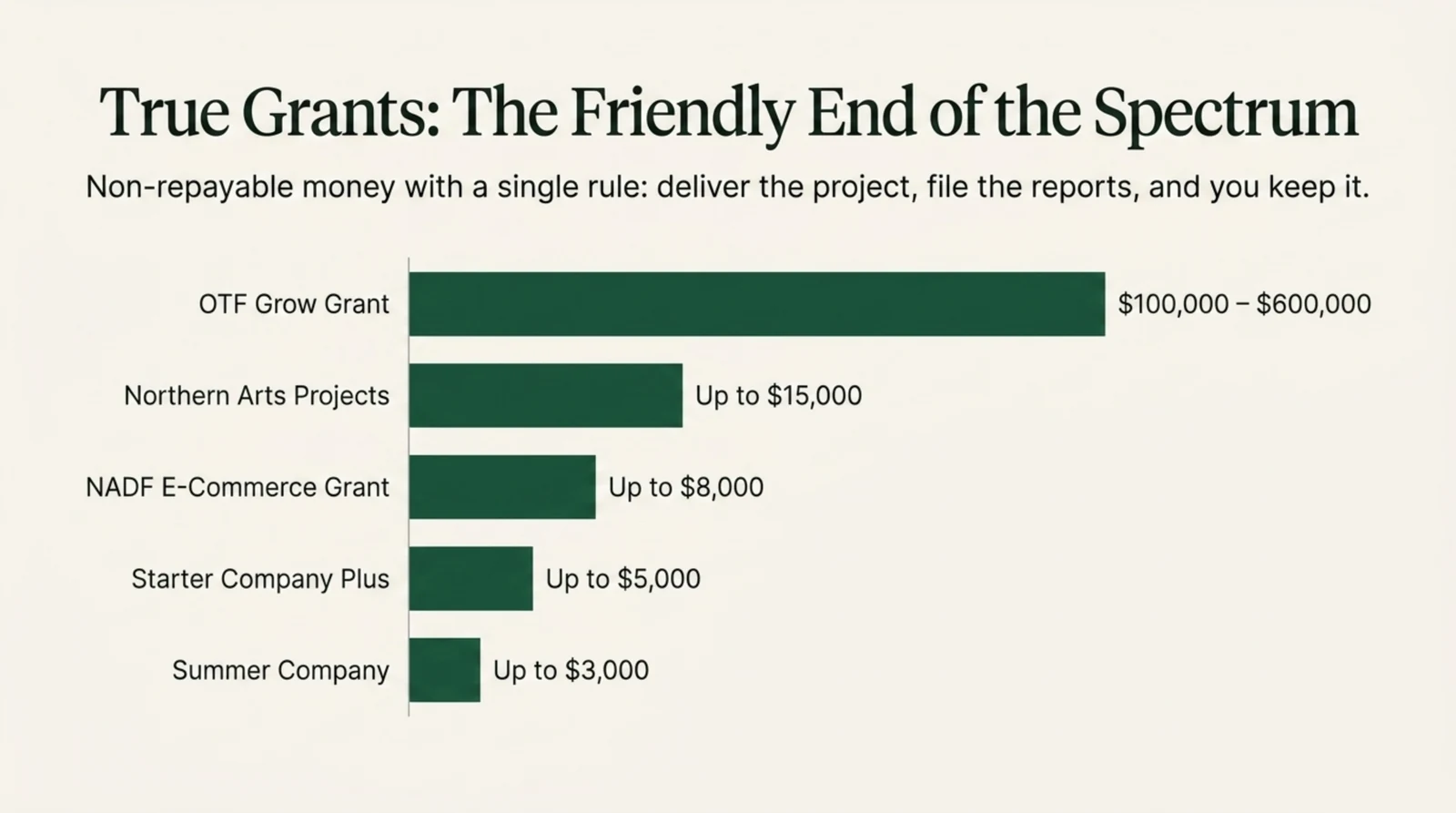
A grant is money you do not repay, provided you spend it on what you said, within the period allowed, and file your reports. Fall short and you may have to return unspent funds, but there is no repayment schedule and no interest. It is the simplest instrument and the least common for large business projects.
Examples from the region: OTF Grow Grants fund $100,000 to $600,000 over two to three years to scale a proven community program; Seniors Community Grants run $1,000 to $25,000; Starter Company Plus pairs business training with a grant of up to $5,000; and Summer Company pays students up to $3,000, half up front and half on completing the program.
Even true grants carry conditions: eligible-cost rules, spending windows and reporting. The difference from a conditional contribution is duration. A grant's obligations generally end when the project and its reporting end.
What is a conditional contribution?
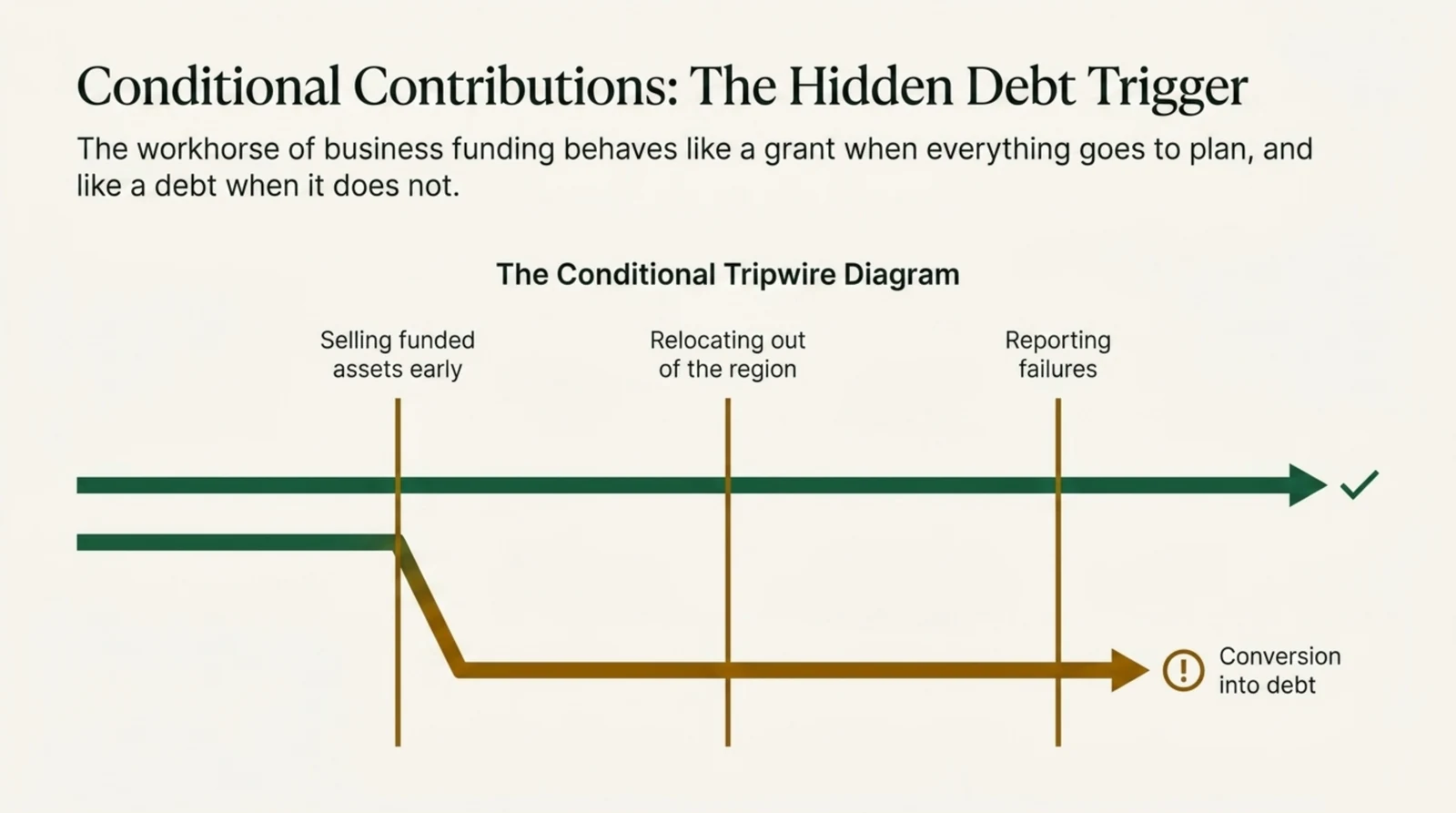
A conditional contribution is non-repayable only for as long as you meet the conditions in your agreement. Typical conditions: complete the project as scoped, hit job creation or retention targets, and keep operating in Northern Ontario for a stated number of years. Breach them and some or all of the money becomes repayable. It behaves like a grant when things go well and like a loan when they do not.
This is NOHFC's standard business instrument, and it is common federally too. NOHFC's Locate stream offers up to $5 million as a conditional contribution to businesses establishing new operations in the North, sometimes paired with a term loan. Waubetek's Business Financing Program provides conditional contributions up to $99,999 for Indigenous entrepreneurs in North-Eastern Ontario. FedNor's CIINO pays up to 90% of costs, to $100,000 a year for up to three years, so small communities can staff economic development capacity.
Before signing, get clear answers on four things: which conditions run past project completion, for how many years, how compliance is measured, and whether a partial shortfall triggers partial or full repayment.
What is a repayable contribution, and how is a forgivable loan different?
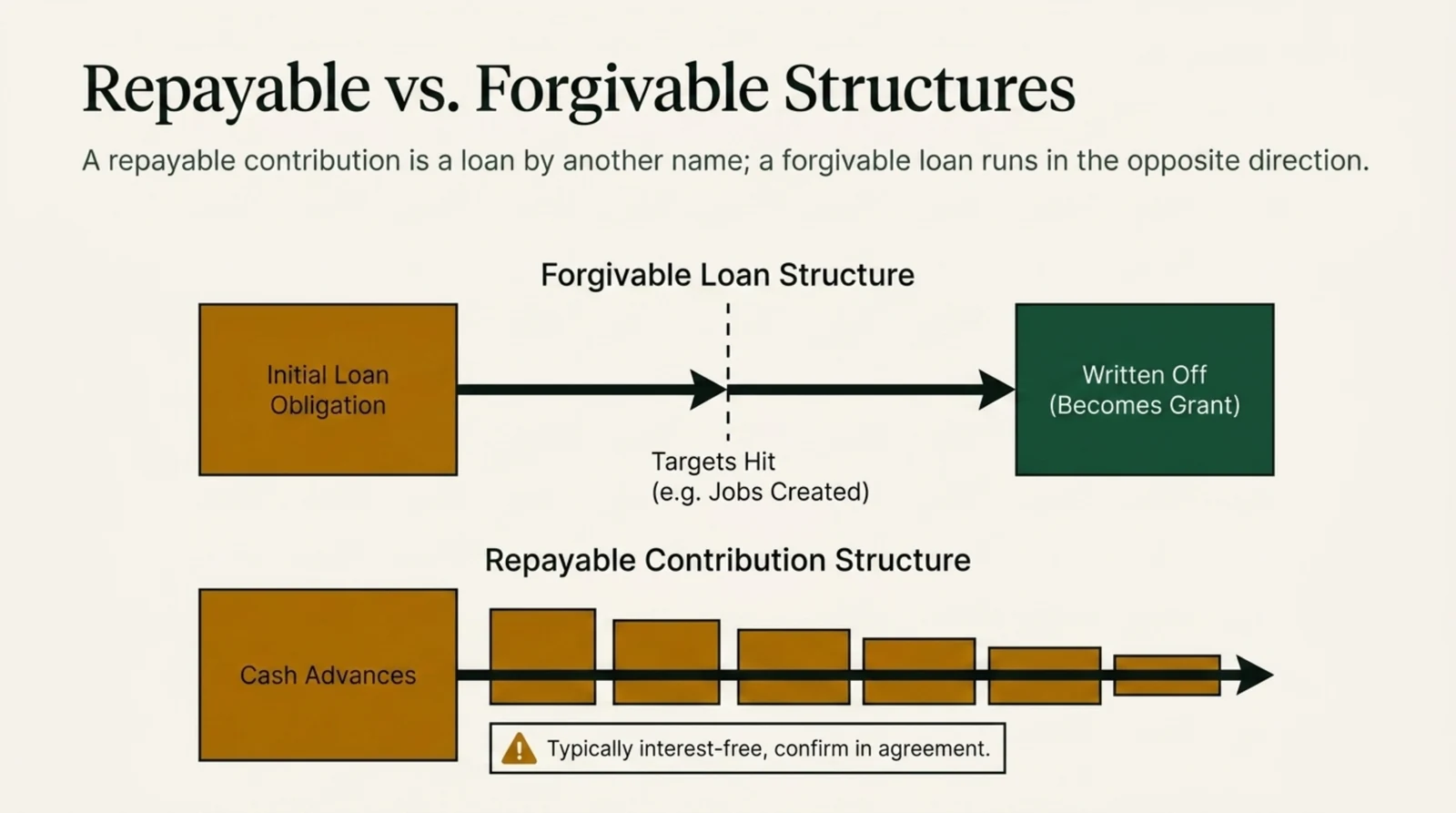
A repayable contribution is a loan by another name: you repay the principal on a schedule. Federal economic development programs commonly make them interest-free, though you should verify that for your specific program. A loan proper usually carries interest and security. Both are debt: they belong on your balance sheet and in your ratios, and a bank will treat them that way.
Examples across the spectrum: business support under FedNor's NODP is commonly structured as repayable for for-profit applicants (verify the instrument and terms with FedNor); Community Futures business loans are commercial-style loans commonly up to $150,000 through your local CFDC; the Métis Voyageur Development Fund lends up to $1,500,000 to businesses with majority Métis ownership; Ontario's Tile Loan Program lends up to 75% of the value of tile drainage work, capped at $50,000 in loans per person per fiscal year, on fixed terms; and PARO's Peer Lending Circles approve loans of $1,000 to $5,000 through a member circle.
A forgivable loan sits between the two. It is registered as debt and then forgiven, usually in stages, as you meet conditions: staying in the property, keeping units rented, continuing to operate. Break the conditions before the forgiveness period ends and the unforgiven balance is due. In substance it is a conditional contribution wearing loan paperwork; the practical difference is that it may be registered on title or secured, which affects your other borrowing.
Mixed packages deserve the same careful reading. Waubetek's Indigenous Women's Entrepreneurship micro-loan fund provides up to $20,000 structured as 45% non-repayable, 50% repayable and 5% cash equity, and NADF's Indigenous Women Entrepreneurship Program similarly blends support (confirm the current split with NADF). Municipal incentives split the same way: Thunder Bay's Housing CIP pays 100% of eligible costs up to $25,000 per qualifying new unit as a grant, while Greater Sudbury's TIEG pays out as an annual rebate of the municipal tax increase your development creates: a grant in instalments that depends on completing and holding the development.
What is the NOHFC agriculture 30/70 split?
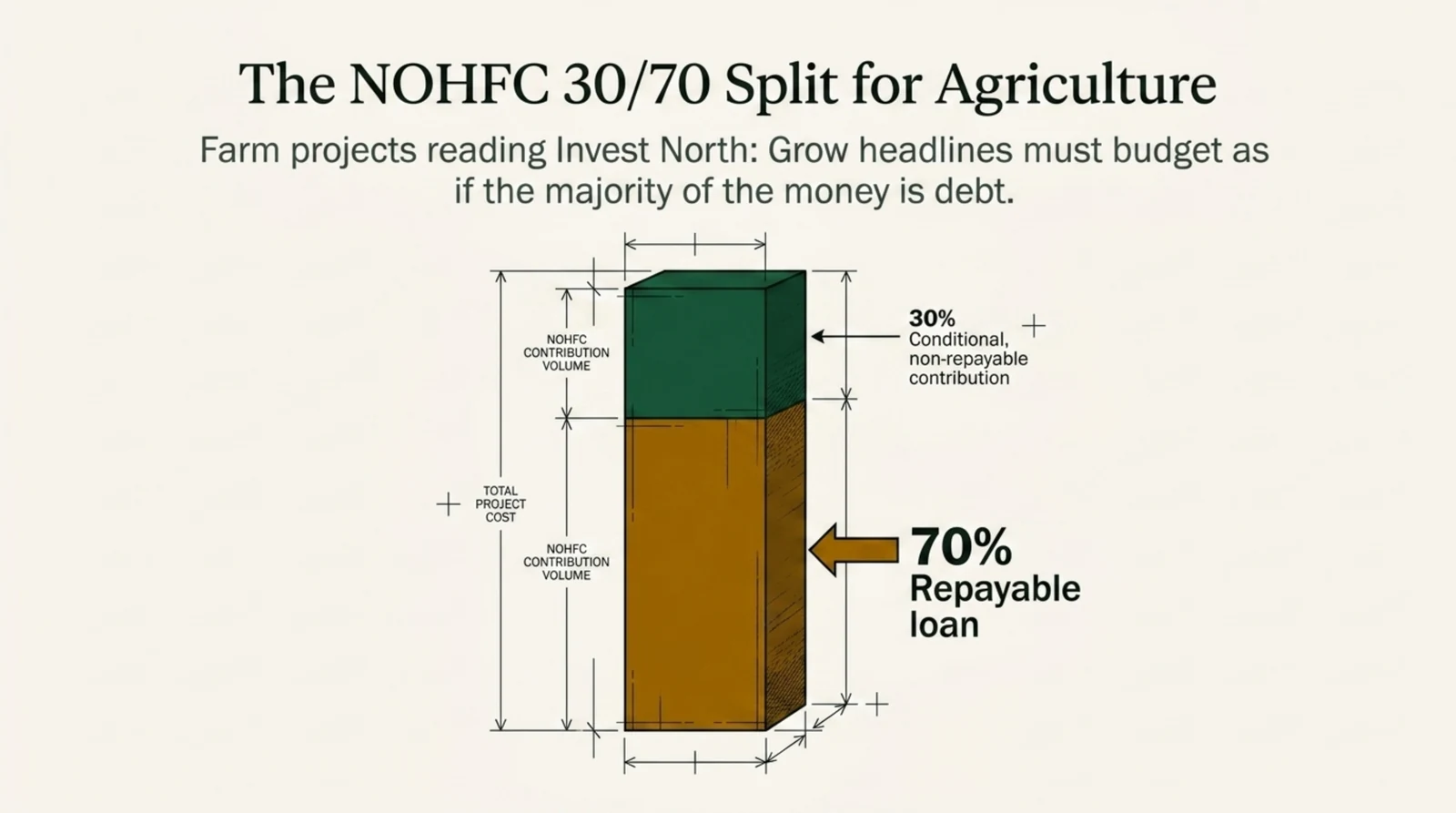
NOHFC support for agricultural business projects is reported to be delivered as a split instrument: part conditional contribution, part repayable term loan, commonly described as a 30/70 split with the smaller share non-repayable. NOHFC adjusts program terms over time and the structure can vary by project, so confirm the current split with NOHFC before building it into a financing plan. The planning consequence is what matters: model most of the support as debt service, not as a grant.
Agriculture also has purpose-built exceptions that are more generous. NOHFC's Regional Tile Drainage Program covers 50% of tile drainage contractor costs to a maximum of $500 per acre, plus 100% of project-management fees (10% of contractor costs, to a maximum of $100 per acre), subject to an overall cap. It pairs naturally with the Tile Loan Program, which finances up to 75% of the value of the work as a fixed-term loan, so a farm can cover most of a drainage project between the two instruments. Ask both offices how the programs interact on one project before committing.
What other instruments will you meet, and what should you check before signing?
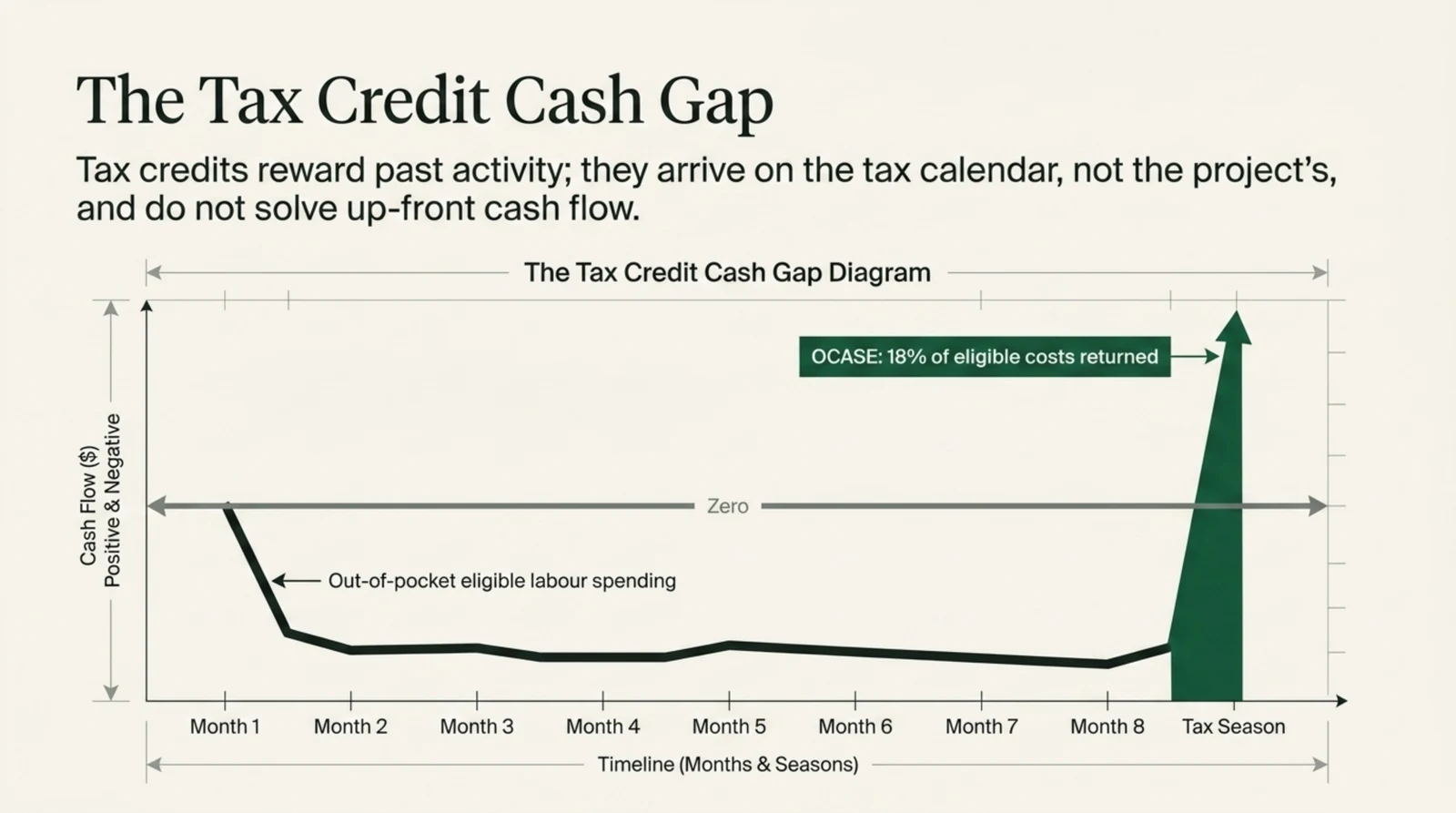
Three more shapes appear regularly: tax credits, rebates and wage subsidies. A tax credit is claimed through your tax return after the spend; OCASE is a refundable Ontario credit worth 18% of eligible Ontario labour expenditures for computer animation and special effects work, with no cap. A rebate pays you back after eligible work is done; Home Renovation Savings pays up to $7,500 for a cold-climate heat pump in homes heated with electricity, oil, propane or wood. A wage subsidy offsets payroll for eligible hires; SWPP is reported at 50% of wages up to $5,000 per student placement as of summer 2026.
Whatever the instrument, run the same checklist before you sign:
- Repayment triggers: exactly what causes repayment, and for how many years the conditions run after completion.
- Cost of the money: interest, security, personal guarantees, and whether anything is registered on title.
- Cash flow: whether funds arrive up front or as reimbursement of paid invoices. Most contributions reimburse, often with a holdback until final reporting, so plan working capital accordingly.
- Stacking clawback: what happens if total government assistance ends up over the limit in your agreement.
- Reporting: what you must file, how often, and for how long.
Ask the program officer to walk you through the agreement template before you apply, and ask your accountant how the assistance is treated for tax purposes, because government assistance generally affects taxable income or the cost base of assets. Neither question costs anything, and both are cheaper before signing than after.